
Last updated September 20, 2026
Free on-site gate assessment - hinges, posts, and your LiftMaster or Nice gate operator checked before anything is quoted
The assessment is free and the quote is the invoice.
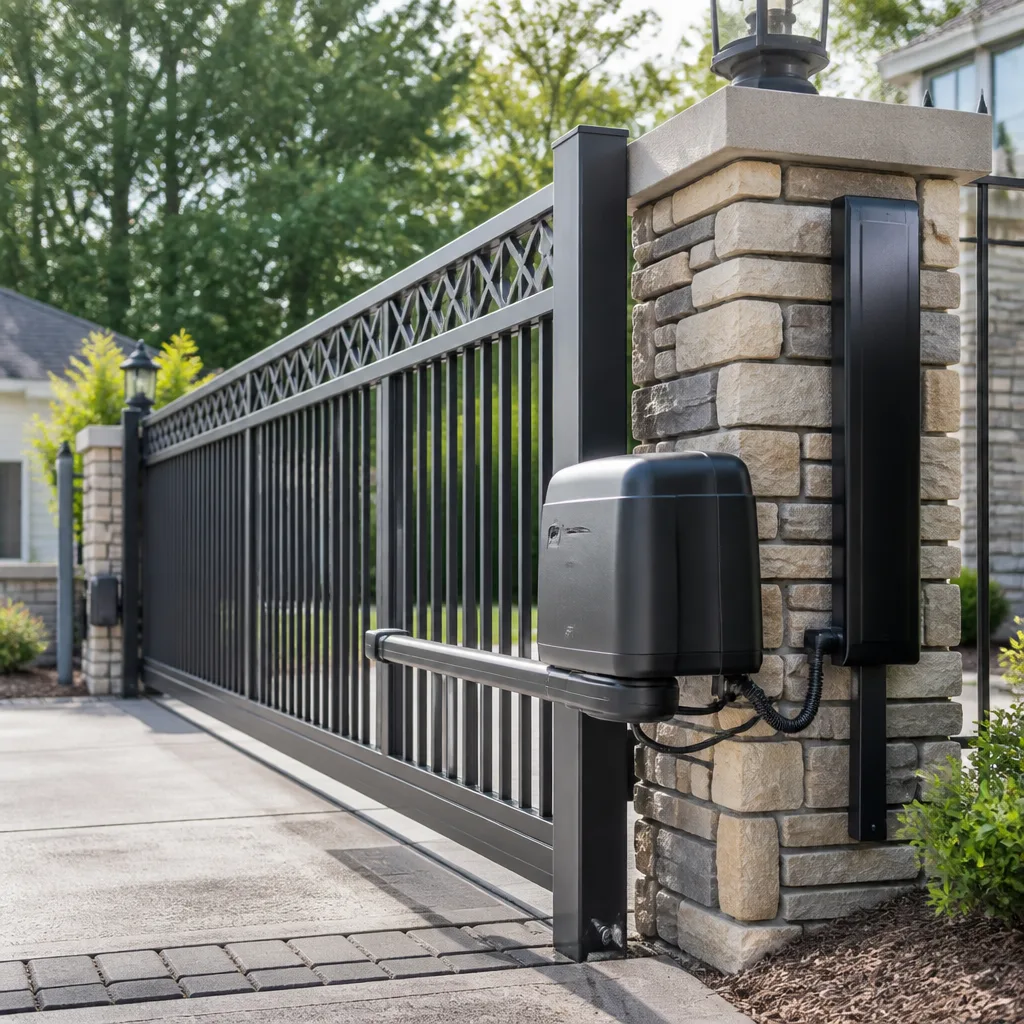
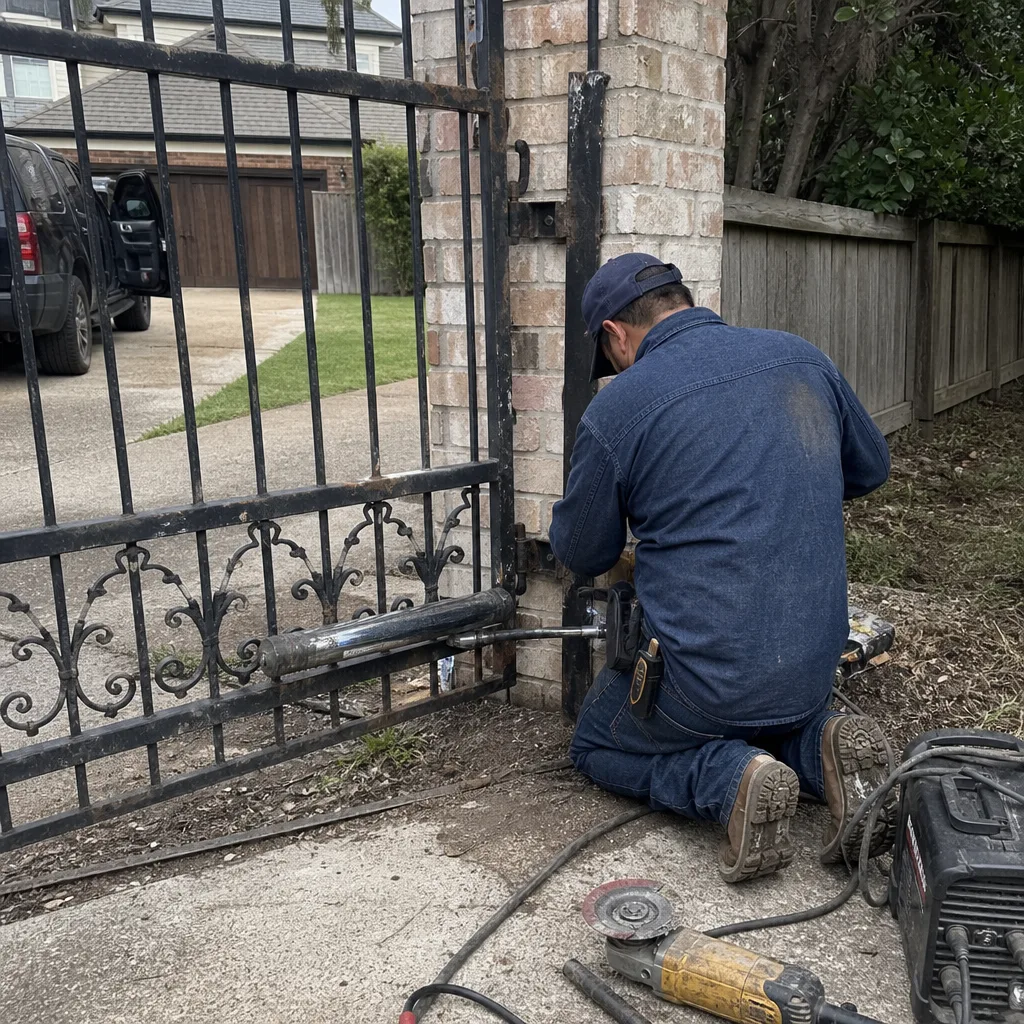 Before
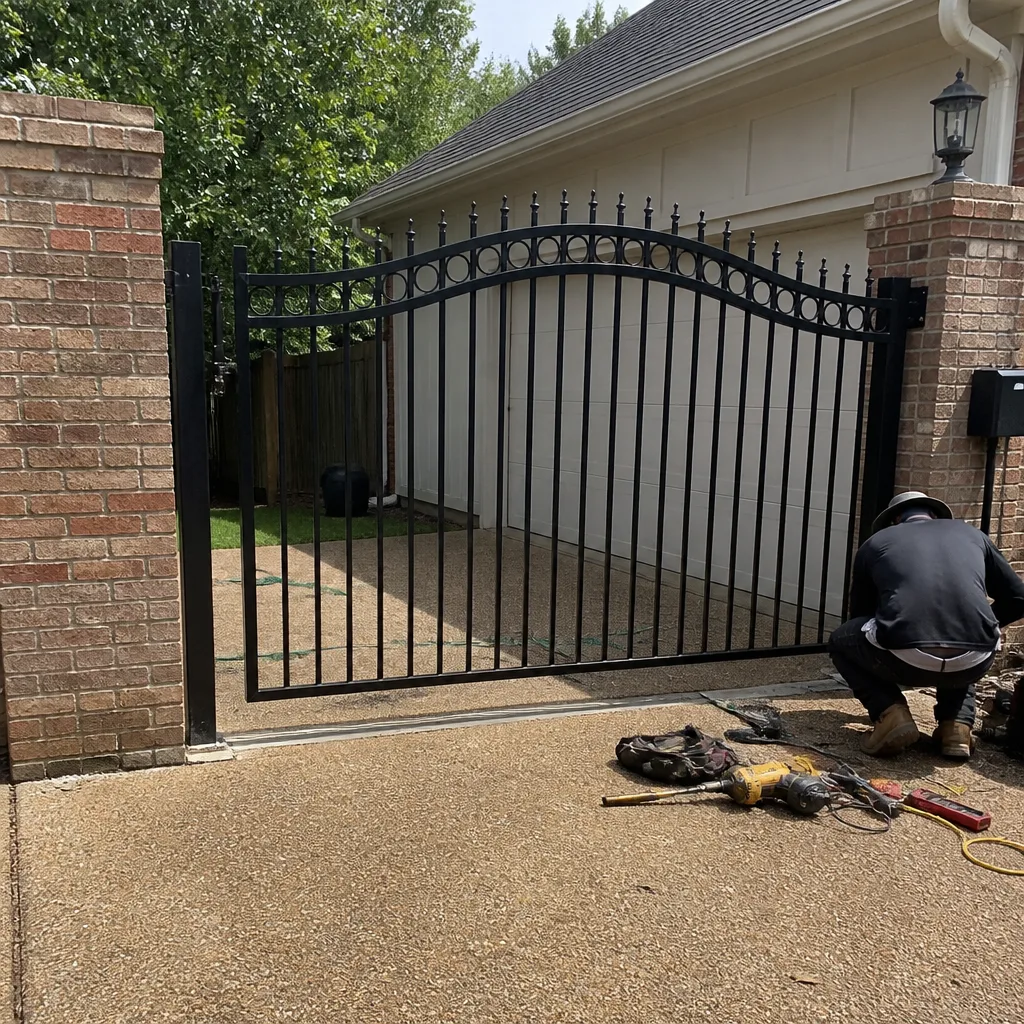 After
After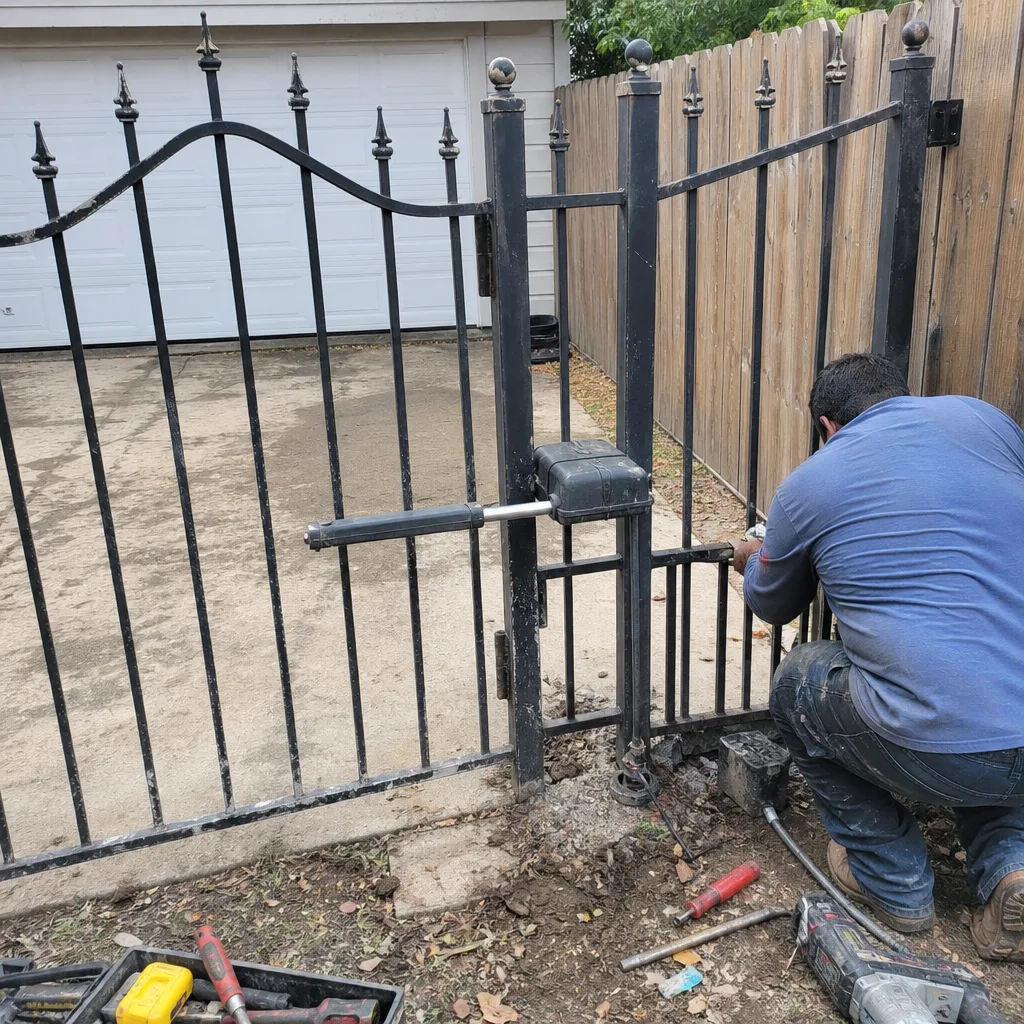 Before
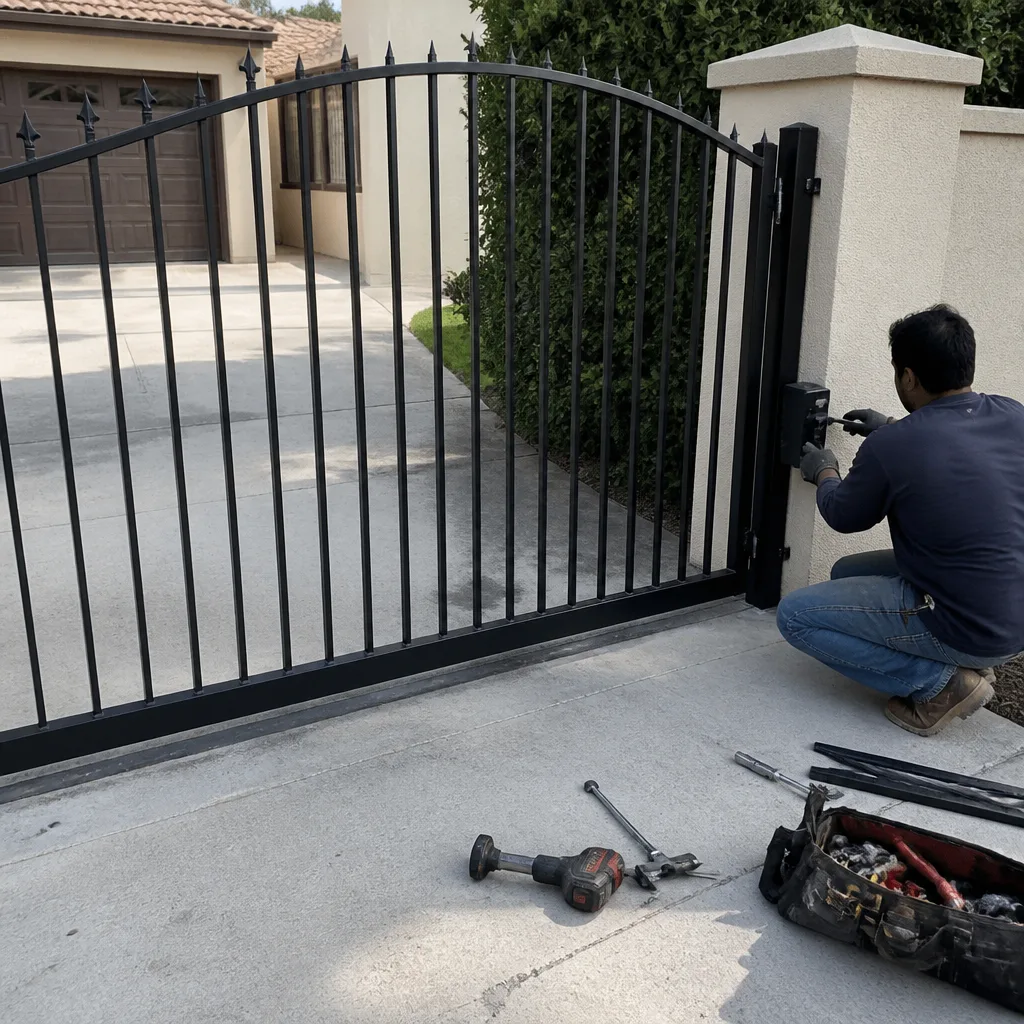 After
After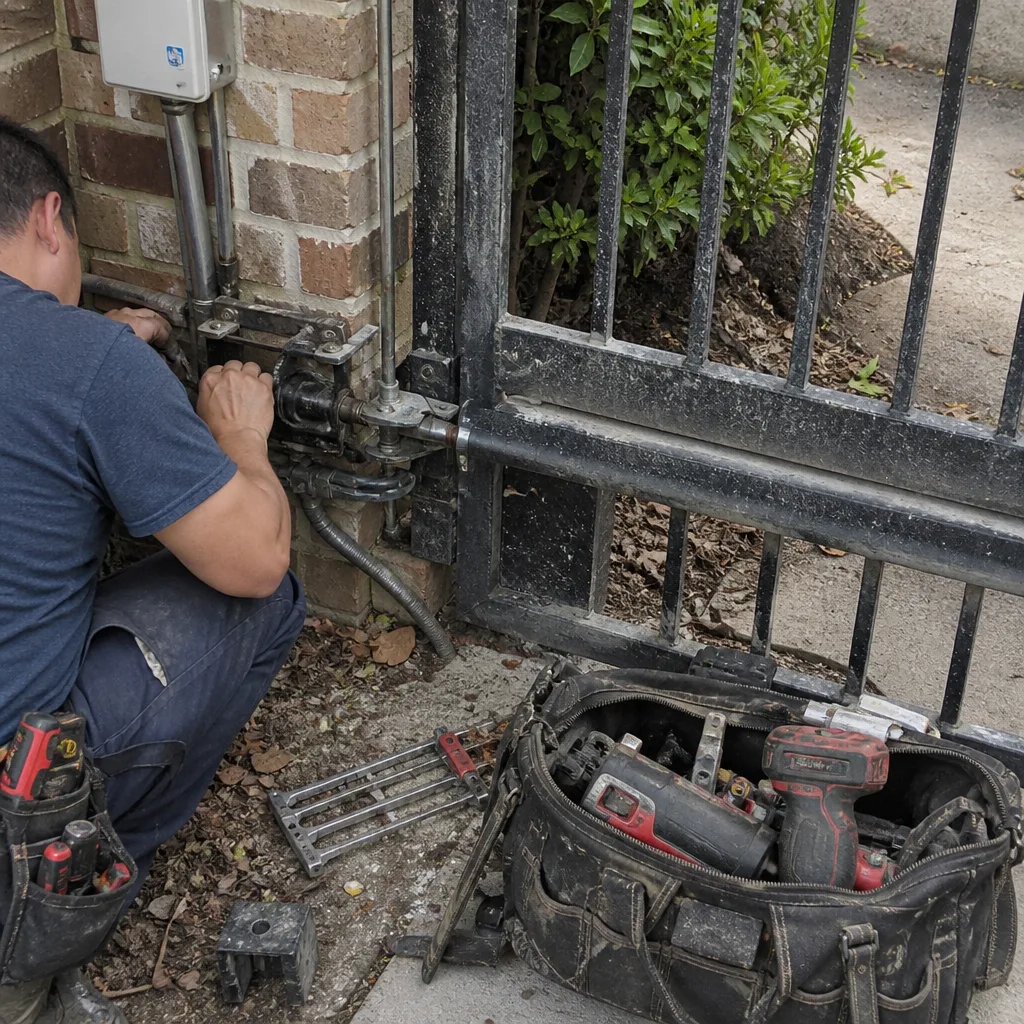 Before
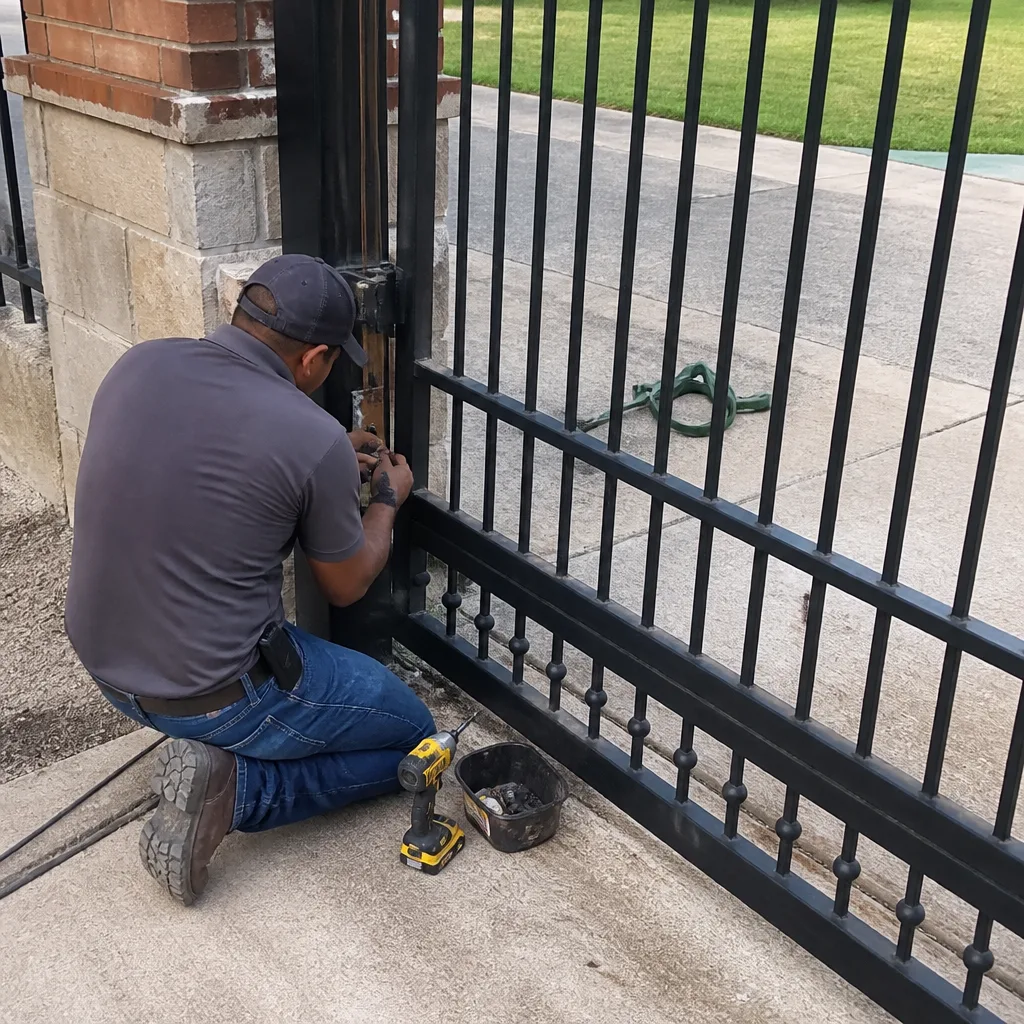 After
AfterHow to Hire a Gate Repair Contractor in Sugar Land: A Step-by-Step Guide
Most homeowners in Sugar Land don’t lose money on gate repair because they hired an incompetent contractor. They lose money because they accepted a verbal estimate, shook hands on a vague scope, and discovered 90 days later that the “repair” covered nothing when the same motor failed again. This guide walks you through the hiring process the way a careful contractor would: what to ask, what to demand in writing, and what a legitimate gate repair agreement actually looks like.
Quick Answer
The right way to hire a gate repair contractor in Sugar Land is to demand a written scope of work with specific part numbers, confirm real experience with your gate’s automation brand, require photographic documentation after the job, and structure payment so final money changes hands only after the gate demonstrates correct function. For seasonal gate repair care for Sugar Land: year-round homeowner’s guide tips, see our dedicated resource. Skip any contractor who won’t put the price in writing before work begins.
Table of Contents
- What a Written Scope of Work Must Contain
- How to Verify Real Experience With Your Gate Brand
- Red Flags in Vague Gate Repair Language
- Questions to Ask About Post-Repair Documentation
- How to Structure Payment Terms That Protect You
- What a Warranty Clause Should Actually Say
- Sugar Land-Specific Factors That Affect Gate Repair
- The Complete 7-Step Hiring Checklist
BeforeAfterWhat a Written Scope of Work Must Contain
If a contractor can’t produce a written scope of work before touching your gate, you don’t have a repair agreement. You have a conversation. And conversations aren’t enforceable when something goes wrong. This is the single most important hiring criterion, and it’s the one most Sugar Land homeowners skip because the contractor seems friendly and the price sounds reasonable.
A legitimate written scope contains specific, checkable items. Not adjectives. Not intentions. Here’s what it should include:
- Exact part numbers. “Replace circuit board” is meaningless. “Replace LiftMaster LMWEKITU receiver logic board, part number K41-0508-000” tells you the contractor diagnosed the actual component and knows what he’s ordering. If the scope says “gate motor parts as needed,” walk away.
- Labor steps in sequence. The scope should read like a work order: disconnect power, remove actuator arm, replace limit switches, recalibrate travel, test obstruction sensors, verify open/close cycle 10 times. Each step should be checkable.
- What is included. Does the price cover the new photo-eye alignment? The wiring pigtail? The mounting bolts? The scope should name what the contractor is responsible for completing.
- What is excluded. Just as important. If concrete work or post replacement isn’t included, that must be stated before work starts, not discovered on an invoice after the fact.
- Total price in dollars. Not an estimate range. Not “approximately.” A flat number, written down, agreed to by both parties.
- Anticipated completion date or timeframe. Not “when we can get to it.” A specific day or a written window.
At Vance Gate Repair in Sugar Land, every quote follows Haven Standard Clause 1: the price is written and handed to the homeowner before any tool comes off the truck. Every scope names the part number, the labor sequence, and what is and isn’t included. If you’re comparing contractors and one is willing to put it in writing while the other only talks numbers, you’re not comparing two prices. You’re comparing a contract to a conversation.
How to Verify Real Experience With Your Gate Brand
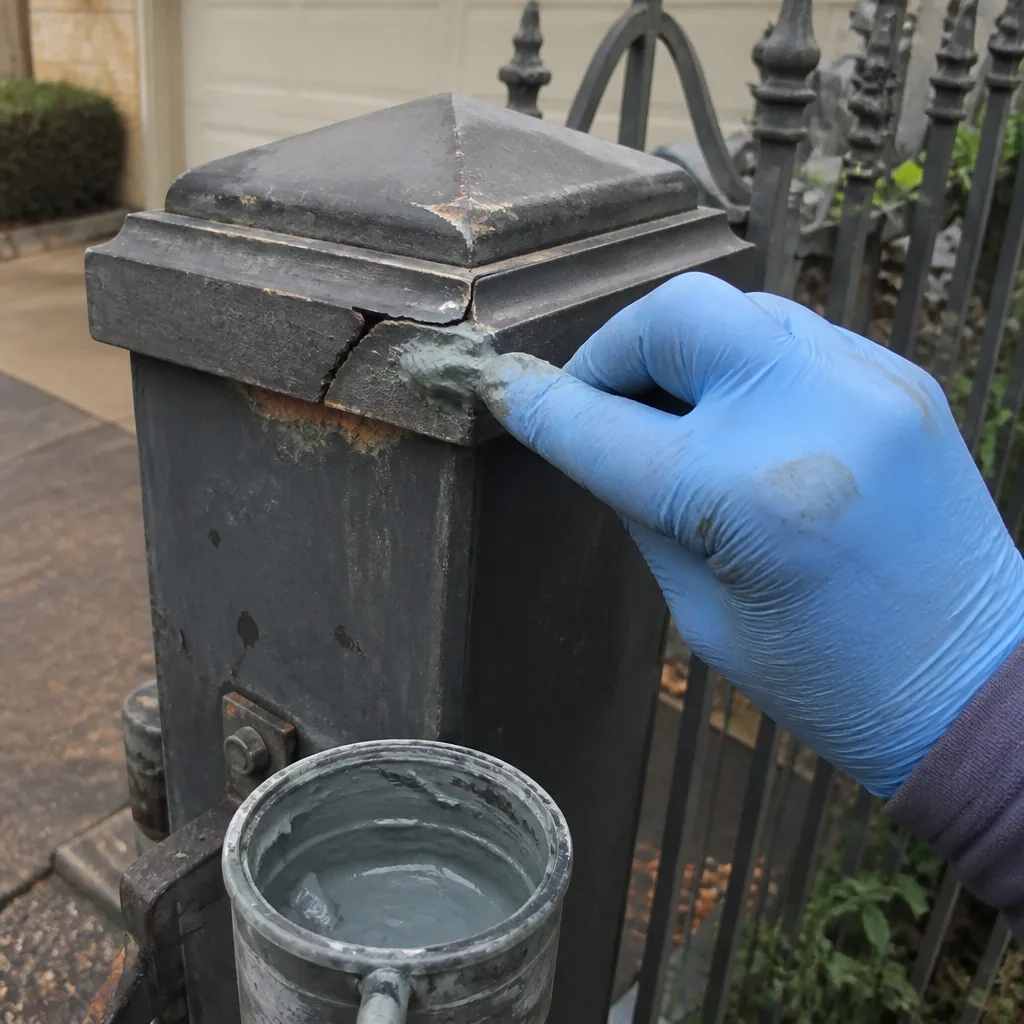
Every gate company’s website has a row of brand logos. Most of them are decoration. A logo means the web designer found a PNG file; it doesn’t mean the technician has ever opened a Ghost Controls control box or diagnosed a Viking actuator. In Sugar Land, where driveways run the range from simple swing gates in Colony Meadows to heavier-sliding configurations in Riverstone and custom steelwork in Sweetwater, brand experience matters more than the generic “we fix all brands” line.
Here are questions that separate genuine experience from logo pasting:
- “What’s the most common failure you see on my specific brand?” A tech with real DoorKing experience can answer this immediately: failing limit switches, worn actuator arms, logic board issues. A tech without that experience will say something generic about “gates wear out over time.”
- “Do you stock parts for this brand, or do you have to order them?” Contractors who actually service Mighty Mule or Elite gates usually keep common replacement parts in the truck. If they have to order basics, they’re not servicing that brand regularly.
- “What diagnostic tools do you use on this brand?” Elite and DoorKing controllers output error codes. A proper diagnosis involves reading those codes, not just tapping the motor and listening. If the contractor doesn’t mention reading error codes or checking limit-switch position, keep looking.
- “Have you completed a warranty registration on this brand?” This is the sneaky one. Most companies that actually install a brand know its warranty registration process. If they’ve never done it, they haven’t installed that brand enough to know the paperwork.
Vance Gate Repair’s owner, Adrian Vance, started in commercial access control in 2014, working on systems where documentation wasn’t optional because facility managers demanded it. That habit carried over to residential work. We service nine automation brands including Ghost Controls, DoorKing, and Elite, because Sugar Land homeowners bought different systems over different decades, and a company that steers every customer toward replacement instead of repair isn’t actually servicing the gate. See the complete guide to gate repair in Sugar Land for deeper guidance. They’re selling motors.
Red Flags in Vague Gate Repair Language
Vague language in a repair estimate is a warning sign, and you should read it as one. When a contractor writes “adjust as needed” or “service gate system,” he’s writing himself a blank check. Here’s what specific red flags look like and what they’re likely hiding:
- “Adjust as needed.” This means the contractor will decide during the job what gets adjusted, and your final invoice will reflect his decisions, not an agreement. A legitimate scope says “adjust limit switches to manufacturer travel specifications” or “correct hinge alignment to within 1/8 inch.”
- “Service gate.” Service is not a repair. It’s a verb without an object. A real scope names the components being serviced: “lubricate hinge pins, inspect and clean photo-eye lenses, test battery voltage under load, verify belt tension.”
- “Parts may be additional.” This one alone should disqualify a quote. The diagnostic step is supposed to determine what parts are needed before the repair quote is issued. If a contractor can’t or won’t identify parts before starting, he’s planning to discover them at your expense.
- “Time and materials.” Time and materials is not a repair agreement; it’s an open meter. The homeowner bears all the risk. Demand a fixed price for a defined scope. Every time.
- “Guaranteed for as long as you own the home.” A warranty longer than the company’s documented track record is a marketing sentence, not a legal commitment. In practice, lifetime language frequently has so many exclusions (acts of God, normal wear, “improper use”) that it covers almost nothing after the first year.
The fix for vague language is simple: ask the contractor to rewrite the scope in specific terms, or keep looking. A contractor who can’t write down what he’s going to do is a contractor you can’t hold to what he does.
Questions to Ask About Post-Repair Documentation
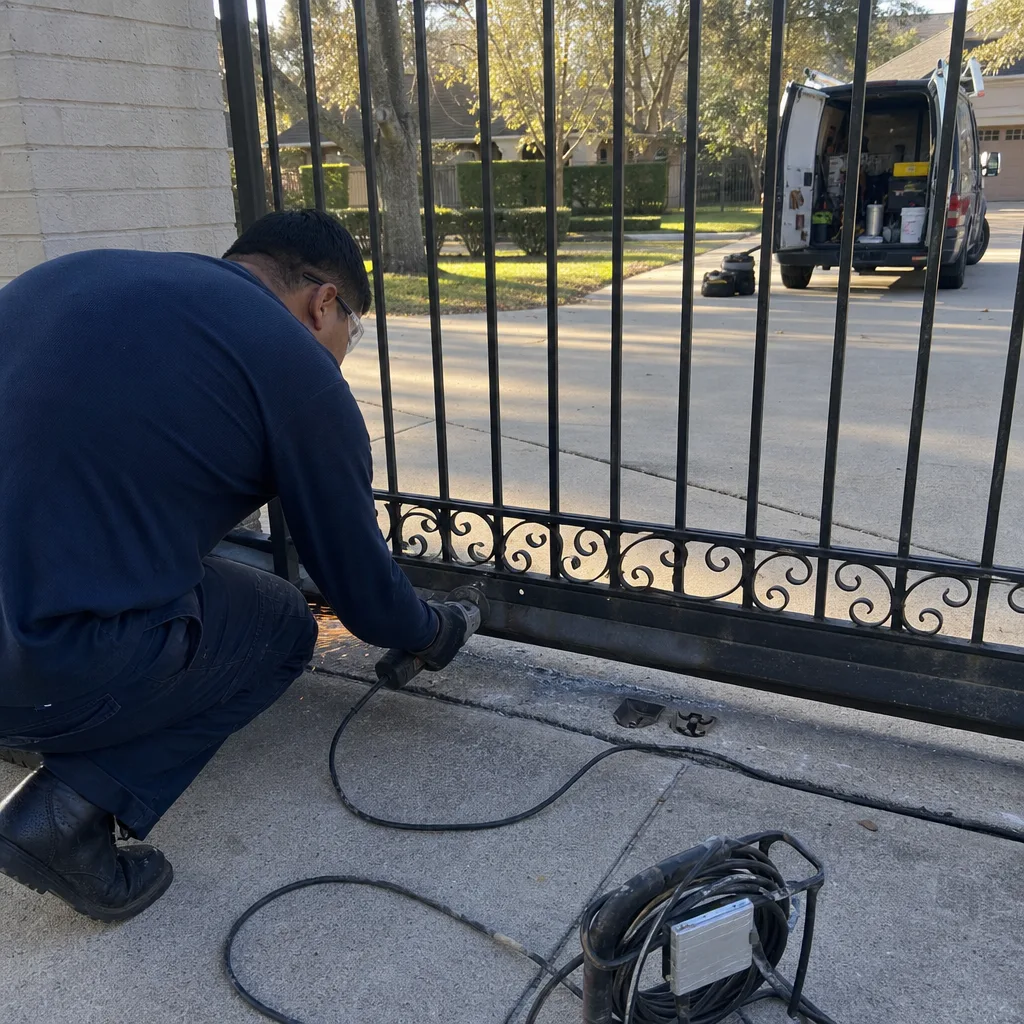
After the gate works again, most homeowners ask one question: “What do I owe you?” That’s the wrong question. The right questions are about what evidence the contractor is leaving behind. Post-repair documentation reveals more about professionalism than the initial estimate does. A contractor who documents his work creates a record you can use later, with another contractor, if something fails. A contractor who doesn’t leaves you starting from zero on the next repair.
Ask these three questions before you hire:
- “Will I receive photos of what you found and what you replaced?” A real professional photographs the failed component before removing it, the new component after installation, and the adjusted settings. These photos serve as evidence of what was done and as a reference point for the next repair. Under Haven Standard Clause 4, every Vance Gate Repair visit includes a documented photo record: what was found, what was adjusted, what was replaced. At no additional charge.
- “Will you leave a written record of the part number installed?” When the replacement board fails in 6 months under warranty, you need the part number and installation date to file a claim. If the contractor can’t produce that record, you can’t enforce the warranty. A proper job record includes the part number, the date, and the technician’s name.
- “What readings did you take, and will you write them down?” Limit-switch positions, motor current draw, battery voltage, force settings. These are measurements, not opinions. A technician who measures and records these readings is diagnosing the system. A technician who “checks things” without recording numbers is guessing. In our experience, this single question sorts the professionals from the parts-changers faster than any other.
The documented record isn’t a frill. It’s the thing that prevents you from paying twice to rediscover the same problem. The next contractor who touches your gate should be able to read the last one’s notes and know exactly what was done. That’s how commercial access control works, and that’s the standard Vance Gate Repair Sugar Land brings to residential gates.
How to Structure Payment Terms That Protect You
The way a contractor structures payment tells you how confident he is in his own work. Contractors who demand full payment before the gate is verified as functioning are transferring risk to you. Contractors who accept payment tied to demonstrated function are signaling that they expect the repair to hold. You should structure your agreement the same way.
Reasonable payment structure for a residential gate repair:
- No payment before the scope is written and agreed. This should go without saying. If a contractor can’t produce a written price before work begins, there’s nothing to pay against.
- Partial payment at start, tied to parts cost. On larger repairs involving expensive components (a new DoorKing control board or Elite actuator, for example), a deposit covering materials is common industry practice. The deposit should correspond to actual parts cost, not an arbitrary percentage.
- Final payment after demonstrated function. The gate should complete at least 10 open/close cycles in front of you, with the safety sensors operating and the motor stopping at the correct travel limits. Watch it work before you pay. If the contractor wants final payment before testing, find another contractor.
- Written invoice stating the repair was completed and tested. That sentence on the invoice is your record if the failure returns within the warranty period.
You should also confirm one thing before agreeing to the job: the price quoted is the price you pay. No “discovered additional work” mid-repair, no surprise line items on the final invoice. The diagnostic step is supposed to identify the problem completely. At Vance Gate Repair’s gate motor and opener service in Sugar Land, the written price is the final price, and if additional work is discovered during the repair, it’s quoted and approved in writing before any additional labor or parts proceed.
What a Warranty Clause Should Actually Say
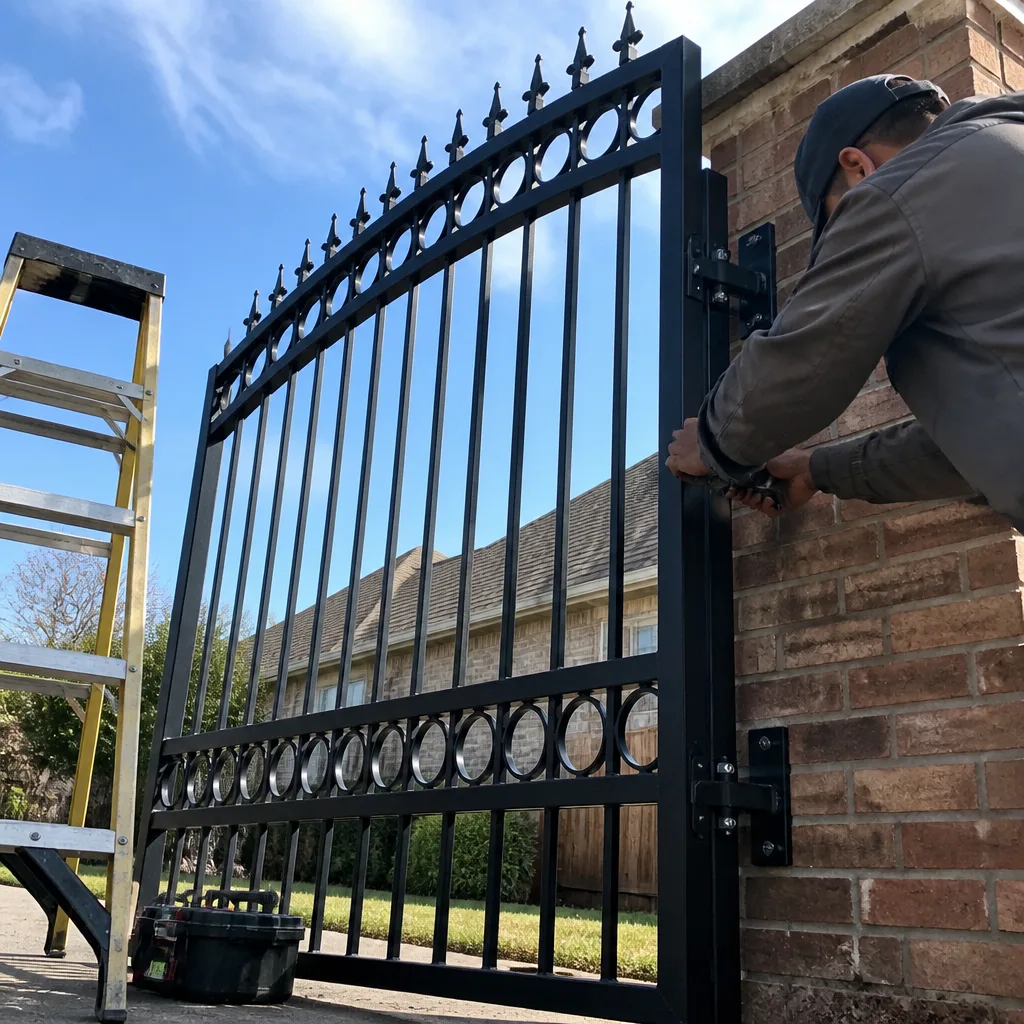
Most gate repair warranties are written to sound generous while committing to very little. “Satisfaction guaranteed” is not a warranty. “Lifetime warranty on labor” usually excludes everything that actually fails. When you’re hiring, read the warranty language the way a contract lawyer would: what, specifically, is covered, for how long, and under what conditions.
A meaningful warranty clause contains these four elements:
- Specific duration in days, not adjectives. “90 days” or “365 days” is a commitment. “For as long as you own the home” is a phrase that means whatever the contractor wants it to mean when you call to collect. A one-year term is the minimum acceptable for a repair. Vance Gate Repair’s 365-Day Done Right Promise covers every completed repair: if it’s not right within a full year, we make it right, at no additional charge, with no argument.
- Named components, not “the repair.” If the warranty covers the replaced circuit board but not the wiring splice made during installation, it should say so. A legitimate warranty names what’s covered: the part installed, the labor to install it, and the adjustment made. “The repair” that covers everything covers nothing.
- A defined remedy process. What happens when you make a claim? Who do you call? How quickly will they respond? A warranty should state the remedy: “if the component fails within the term, we will replace it and perform the labor at no charge.” No arbitration clause, no 90-day response window, no “subject to inspection” without an inspection timeline.
- Written confirmation of the warranty start date. The clock starts the day the repair is completed and tested, not the day the invoice is printed. That date should be written on the warranty document and the invoice.
- Get the scope in writing before any work begins. Part numbers, labor steps, inclusions, exclusions, total price. If the contractor won’t write it, end the conversation.
- Ask the brand-specific questions. “What’s the most common failure on my brand? Do you stock parts for it? Have you ever registered a warranty with the manufacturer?” The answers tell you whether this contractor actually works on your equipment.
- Request the documentation plan. Photos of what was found and what was replaced. Written part numbers. Recorded readings. If the contractor looks confused by the request, he doesn’t document his work, and you’ll pay the next contractor to rediscover what this one should have written down.
- Confirm the warranty in writing. Specific duration, named components, defined remedy, documented start date. “Don’t worry” is not a warranty.
- Structure final payment on demonstrated function. Watch the gate complete 10 open/close cycles with safety sensors working before you release final payment. If you can’t watch, get it in writing that the repair was tested.
- Ask whether the price is final after diagnosis. The written price should be the final price. If the contractor reserves the right to discover additional costs mid-repair, he hasn’t finished diagnosing the problem.
- Get the warranty start date in writing. It should be the day the repair is completed and tested, not the day the parts were ordered or the invoice was written.
You can and should ask for the warranty in writing before you agree to the job. If the contractor’s warranty is described with hand gestures and “don’t worry about it,” that’s the warranty you’ll be dealing with when the gate fails again.
Sugar Land-Specific Factors That Affect Gate Repair
Sugar Land’s climate and construction patterns create specific gate failure modes that a local contractor should anticipate. A contractor driving in from another part of Harris County won’t know this; a contractor who works Sugar Land every week already does.
The first factor is humidity combined with clay soil. Sugar Land sits on heavy, expansive clay that shifts through the year’s wet and dry cycles. That soil movement puts stress on gate posts and hinges, especially on gates poured into non-reinforced footings or gates where the post has shifted just enough to bind the hinge. A local contractor checks post plumb before chasing the motor, because a gate that’s binding against shifted posts will tear up a new actuator the same way it tore up the old one.
The second factor is afternoon heat. In July and August, metal gates in Sugar Land direct sun can be 30 to 40 degrees hotter than ambient air. That heat expansion affects the mechanical side: hinge binding, track expansion on sliding gates, and photo-eye housings warping slightly out of alignment. A contractor who works daily in Gulf Coast heat anticipates this. A contractor who doesn’t will replace a part and return two months later to find the same “new” problem.
Third, Sugar Land’s HOA communities often have deed restrictions governing gate aesthetics and materials. Riverstone, Greatwood, and Telfair each have their own requirements. A local contractor who has worked behind those gates already knows whether the repair can use the existing equipment or whether the HOA requires architectural review before a new motor or gate panel is installed.
When you’re interviewing contractors, ask directly: “Have you worked on gates in my neighborhood?” A contractor who names the communities he serves in Sugar Land is a contractor who knows the local market.
The Complete 7-Step Hiring Checklist
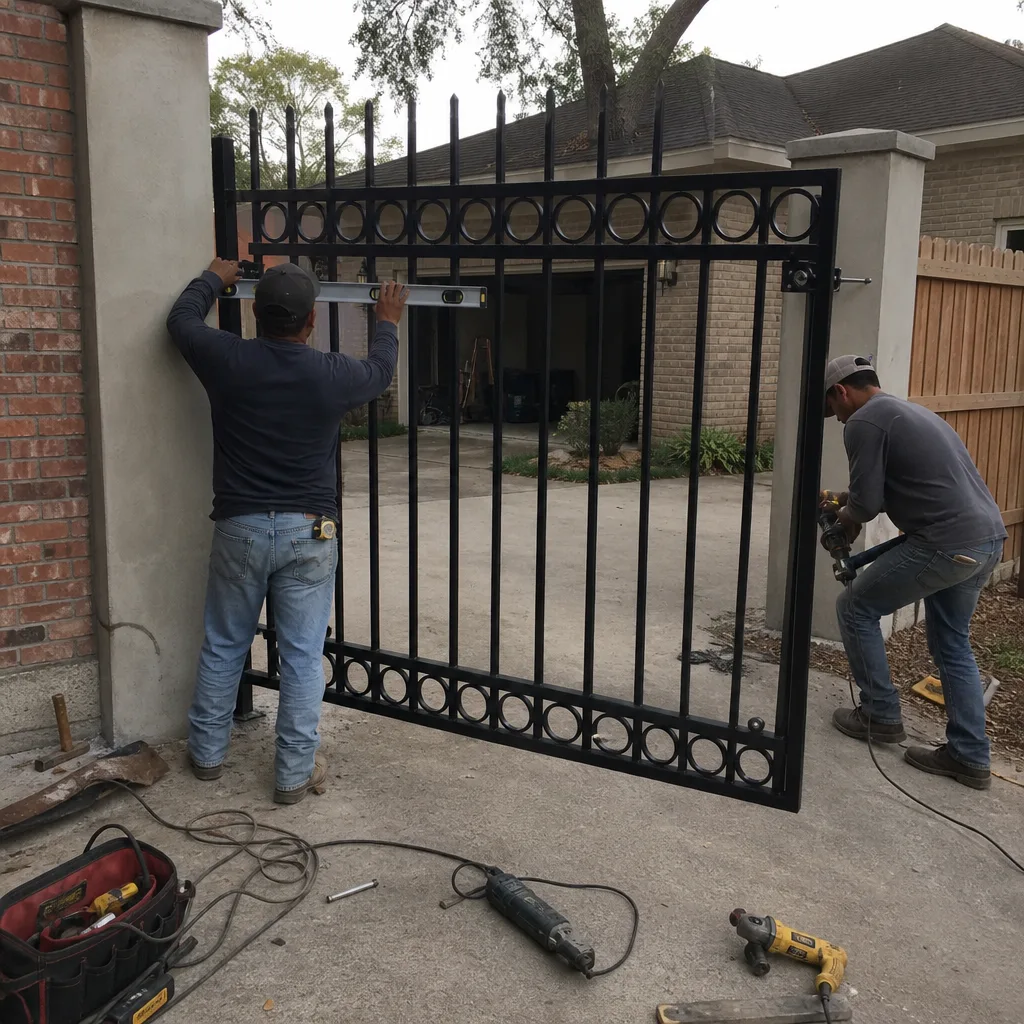
Here is the entire hiring process in sequence. Print this list or save it on your phone. Work through it before you sign anything.
Common Mistakes to Avoid
- Accepting a verbal estimate. If the agreement isn’t written, it doesn’t exist. A verbal estimate is an invitation to a final invoice twice the quoted number, with no way for you to dispute it.
- Hiring on price alone. The lowest bid in Sugar Land frequently comes from a contractor who hasn’t diagnosed the problem and plans to figure it out on your meter. Price matters, but only after the scope is specific enough to compare.
- Not asking about brand experience. Every gate company says they service every brand. Most don’t service your brand regularly. The brand-specific questions in this guide sort it out in five minutes.
- Paying in full before testing the gate. Once the full amount clears, your leverage is gone. Tie final payment to demonstrated function, and don’t apologize for it.
- Skipping the documentation request. The photo record and written part number are the difference between a one-time repair and a cycle of rediscovery. If the contractor won’t document, you’ll pay for the same diagnosis twice.
- Not checking HOA requirements before work starts. In Sugar Land’s master-planned communities, some gate replacements require architectural review. A surprise notice from your HOA two weeks after the repair is a preventable problem.
When to Call a Professional
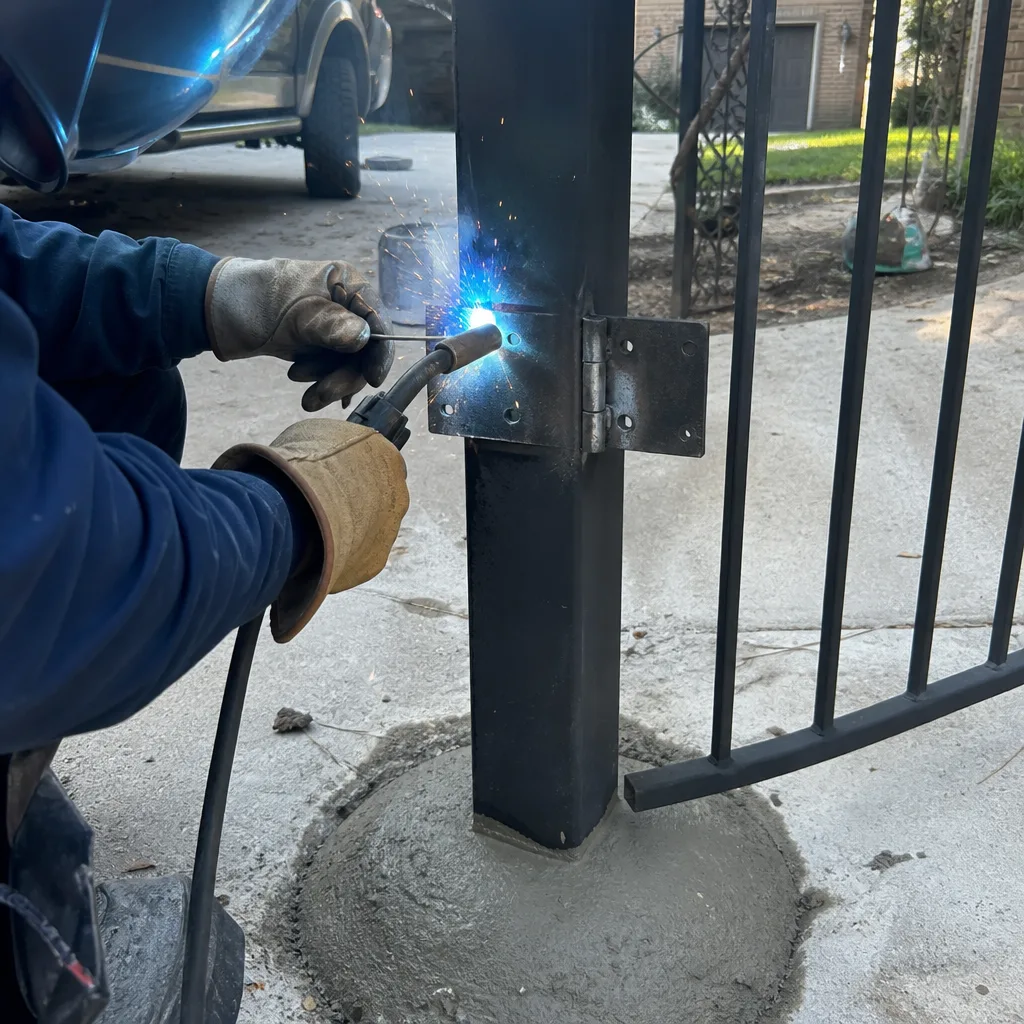
Some gate issues are safe to investigate on your own: a remote control with dead batteries, a photo-eye with visible dirt on the lens, a track with obvious debris. Anything beyond that, call a professional. If your gate won’t open or close fully, the motor runs but the gate doesn’t move, you hear grinding from the actuator, or the safety sensors fail to stop the gate when obstructed, the problem is mechanical or electrical and can cause injury or property damage if mishandled. Gate motors store significant torque, and a misaligned limit switch can cause a gate to travel past its physical stop and damage the post or the motor. A trained technician diagnoses and corrects this safely. Vance Gate Repair’s gate installation and repair services in Sugar Land offer free estimates, and we can often schedule same-week service.
Frequently Asked Questions
Most Sugar Land gate repairs fall between $180 and $650, depending on the component and the gate’s automation system. A limit-switch adjustment or photo-eye realignment is typically under $250. A circuit board replacement on a DoorKing or Elite system typically runs $350 to $650 with labor included. A full motor or actuator replacement can range from $800 to $1,800 depending on the brand and whether the mounting hardware is reusable. The only way to know your specific price is to have the gate diagnosed and get a written quote. Call (346) 295-3437 for a free estimate, and we’ll put the price in writing before any work begins.
For emergency gate failures like a gate stuck open or a motor that won’t respond, we can often schedule same-day service in Sugar Land. A live person answers the phone 24 hours a day at (346) 295-3437, so you’ll speak to a human immediately, not a voicemail queue. For non-emergency repairs, we typically schedule within 1 to 2 business days.
Most Sugar Land gate companies service the major automation brands: LiftMaster, FAAC, BFT, Linear, Viking, Ghost Controls, DoorKing, Elite, and Mighty Mule. The real question is which brand your contractor actually sees regularly. Ask whether they stock parts for your specific brand and whether they can name the most common failure mode for it. If they can’t, they’re learning on your gate. Vance Gate Repair services all nine major brands and carries common service parts for Ghost Controls, DoorKing, and Elite systems.
If the motor is less than 8 years old and the failure is a component like a limit switch, photo-eye, or circuit board, repair is almost always the better financial choice. A quality repair on a known system frequently costs 30 to 50 percent of replacement and extends the system’s life by years. Replacement makes sense when the motor has multiple failing components, the cost of repair exceeds 60 percent of replacement, or the system is discontinued with no parts availability. Be cautious of contractors who recommend replacement before they’ve completed a diagnosis. Call (346) 295-3437 and we’ll diagnose the system and provide a written recommendation; if repair is the right call, that’s what we’ll recommend.
Yes, we provide free estimates on gate repair and installation in Sugar Land. The estimate includes a diagnosis of the failure, the specific part numbers and labor steps required, and a written price. That written price is the final price. No surprise charges, no mid-repair discoveries at your expense. Call (346) 295-3437 to schedule.
After the repair is complete and the gate has been tested, you should receive a written invoice that names the part numbers installed, a photo record of what was found and what was replaced, and the recorded diagnostic readings from the repair (limit-switch positions, motor current draw, force settings). This documentation is your record for warranty claims and for any future technician who works on the gate. If a contractor can’t produce this, he hasn’t documented his work, and the next repair will start over from zero. Under Haven Standard Clause 4, this photo record and written documentation is included on every Vance Gate Repair visit at no charge.
The Bottom Line
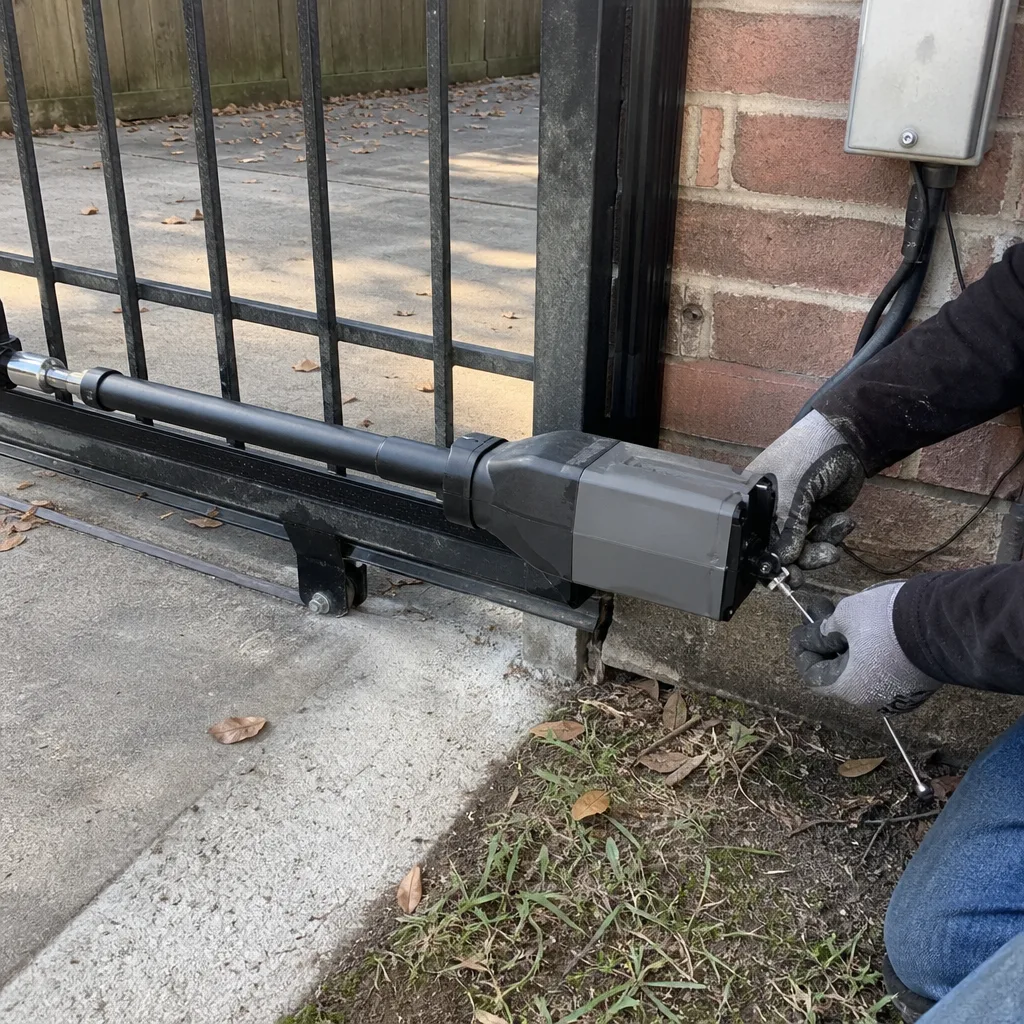
Hiring a gate repair contractor in Sugar Land comes down to one principle: demand to see the evidence. A written scope with specific part numbers. A named price before work starts. A photo record after work is done. A warranty with a defined term and a written start date. Contractors who work this way are protecting you. Contractors who won’t are protecting themselves. The gate on your driveway is a mechanical system with moving parts and stored torque, and the company you hire should treat it with the same documentation discipline a commercial facility manager demands. That’s the standard that has guided Vance Gate Repair since 2014, and it’s the standard Sugar Land homeowners should expect from every contractor they invite onto their property. Explore our more guides & resources for additional homeowner protection strategies.
Written by Adrian Vance, Owner at Vance Gate Repair Sugar Land, serving Sugar Land since 2014.