
Last updated September 20, 2026
Free on-site gate assessment - hinges, posts, and your LiftMaster or Nice gate operator checked before anything is quoted
The assessment is free and the quote is the invoice.

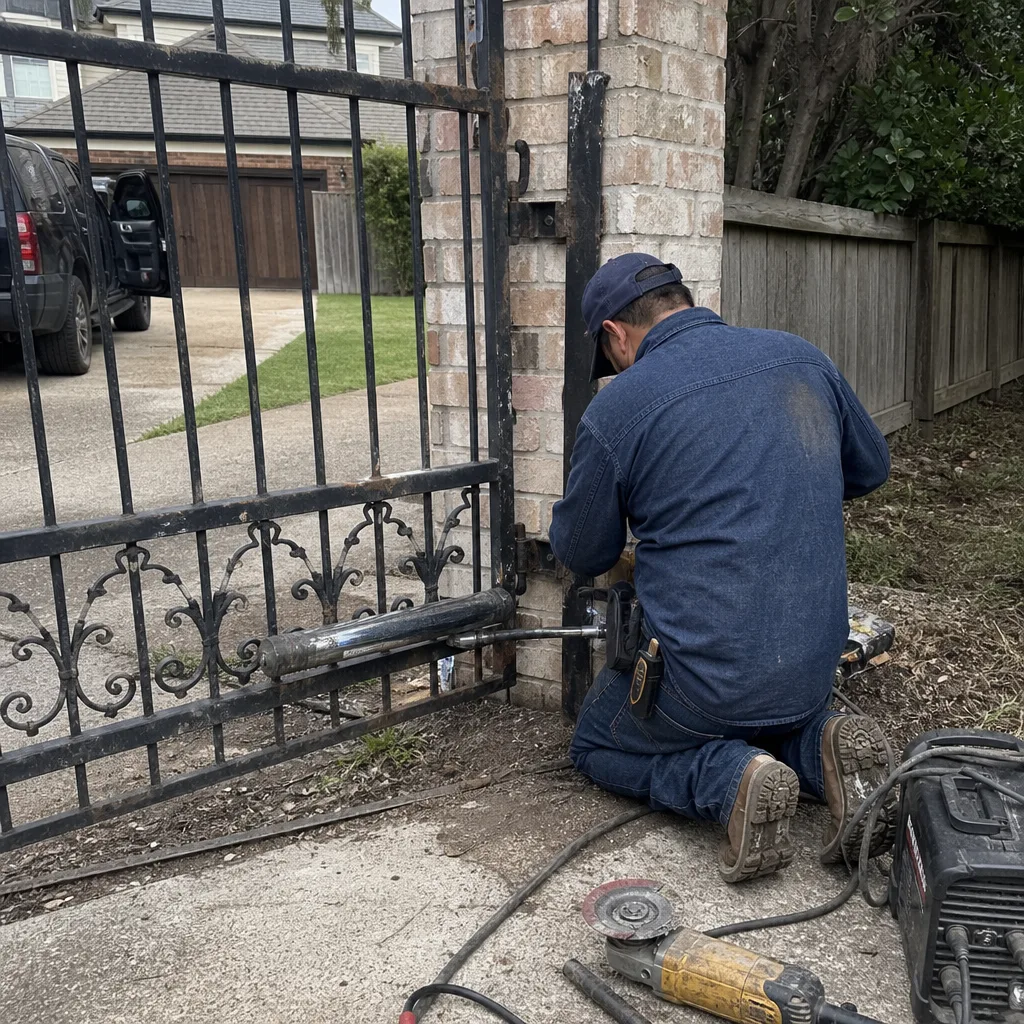 Before
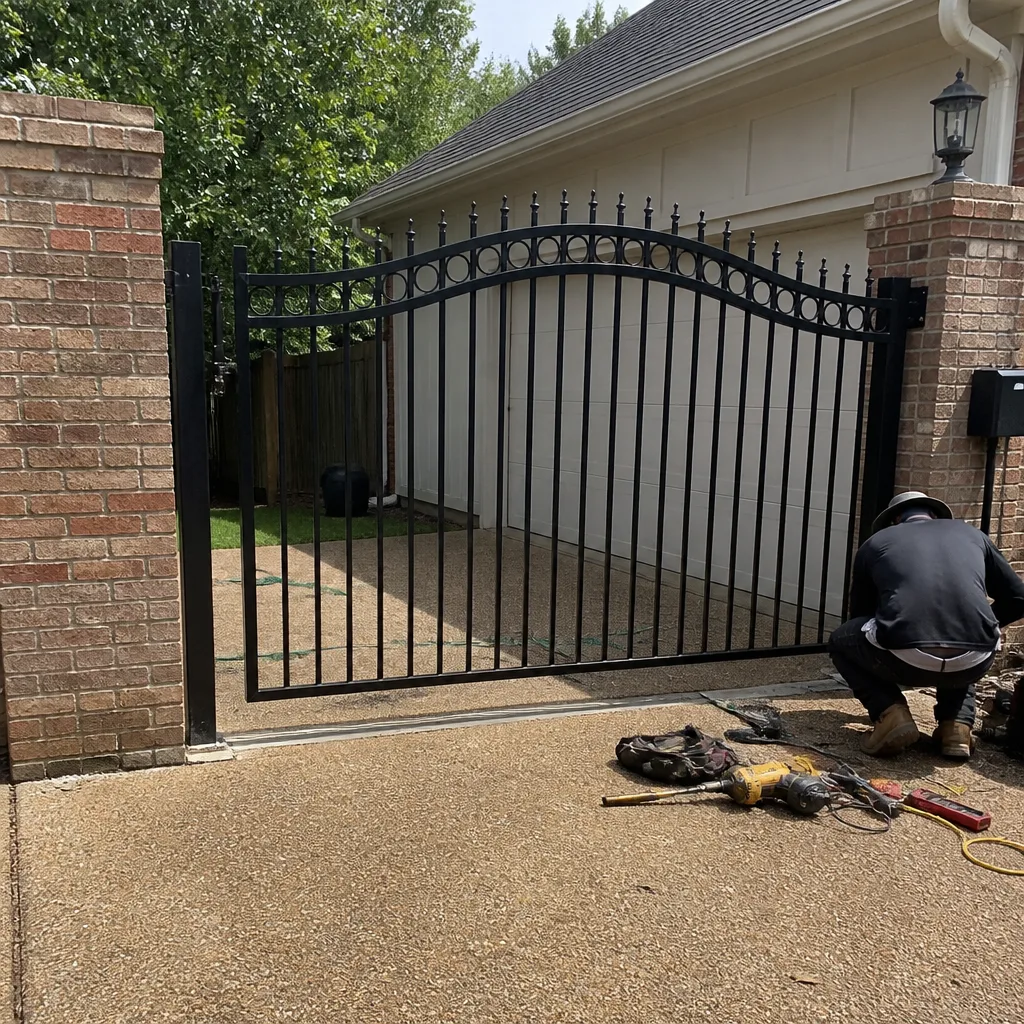 After
After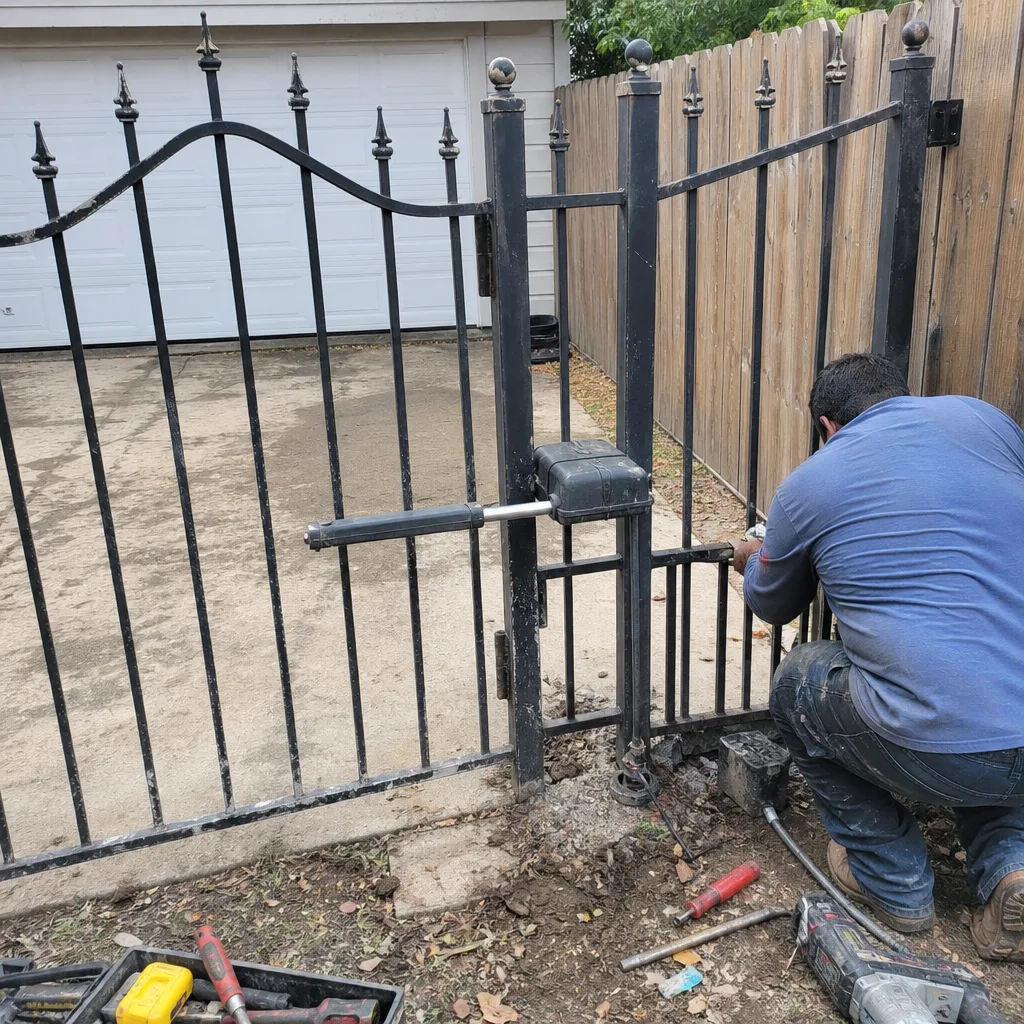 Before
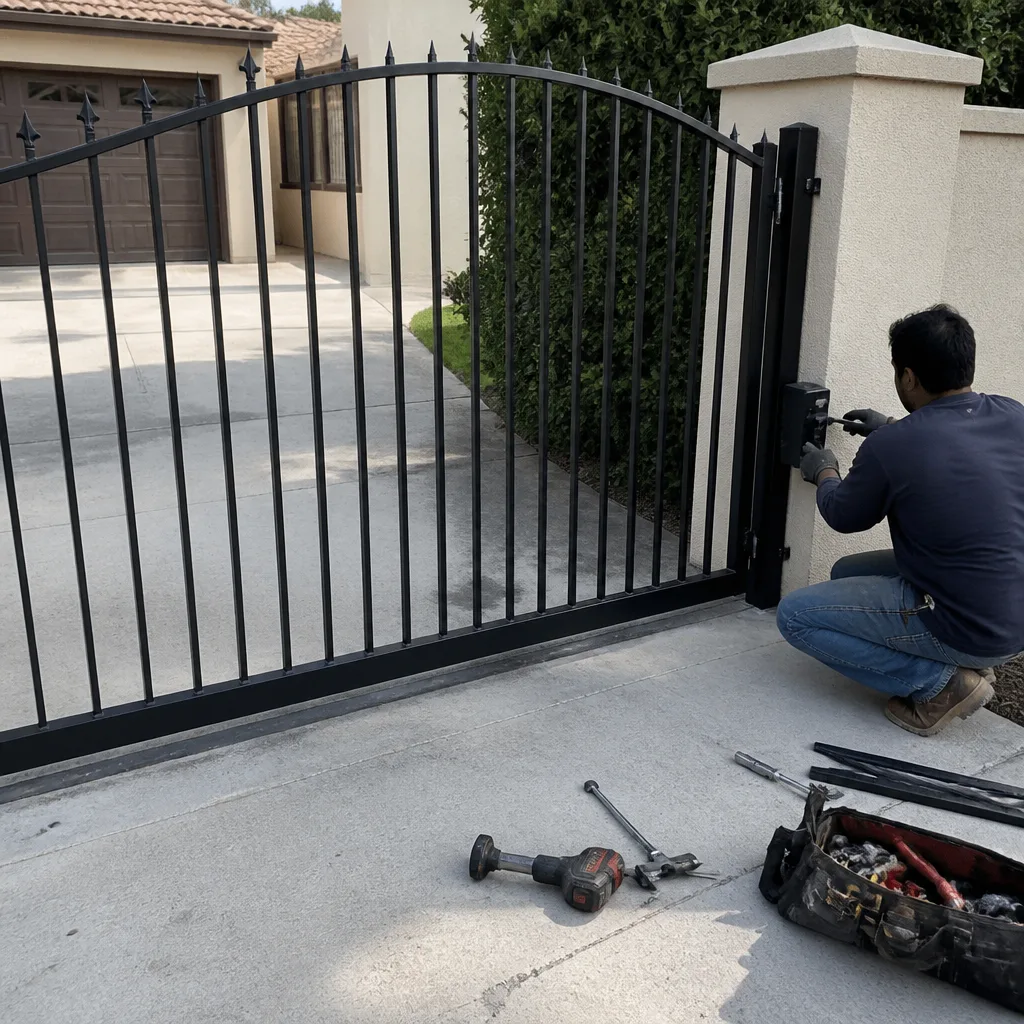 After
After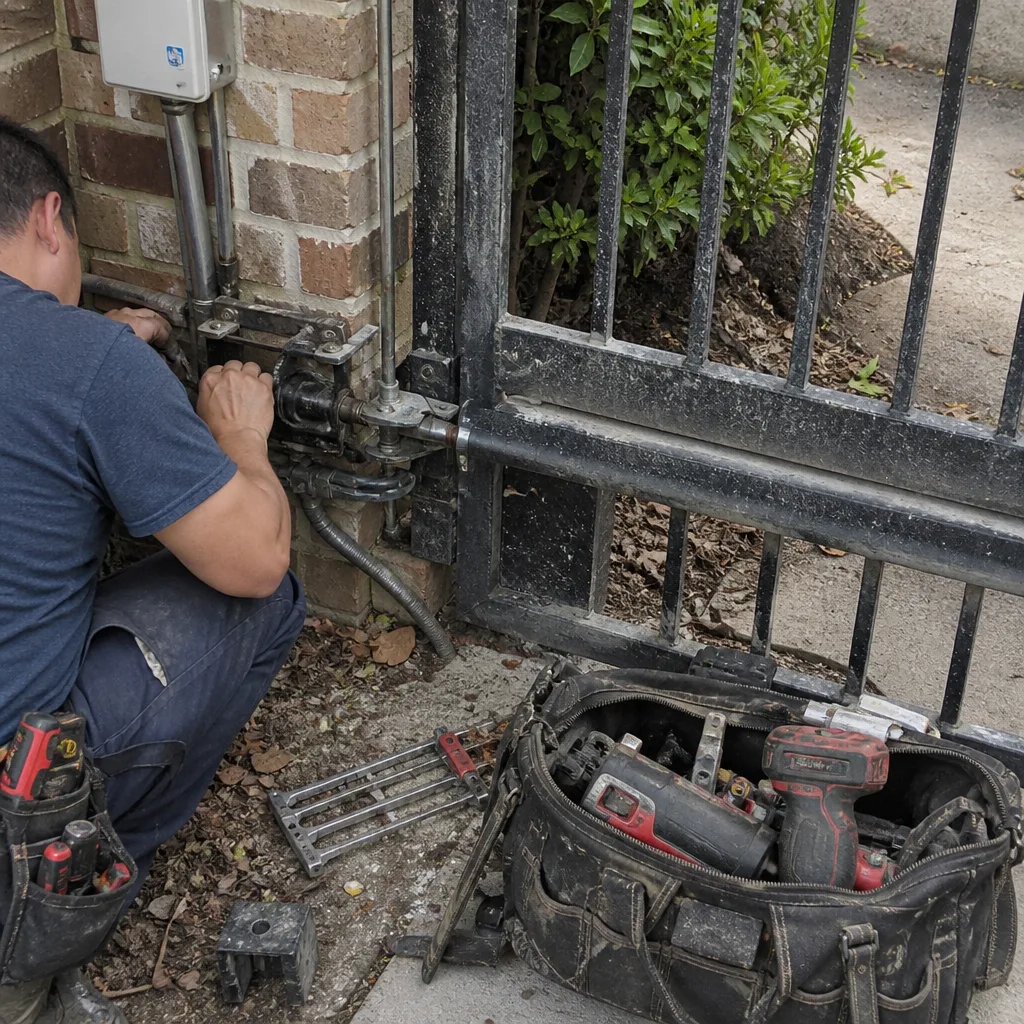 Before
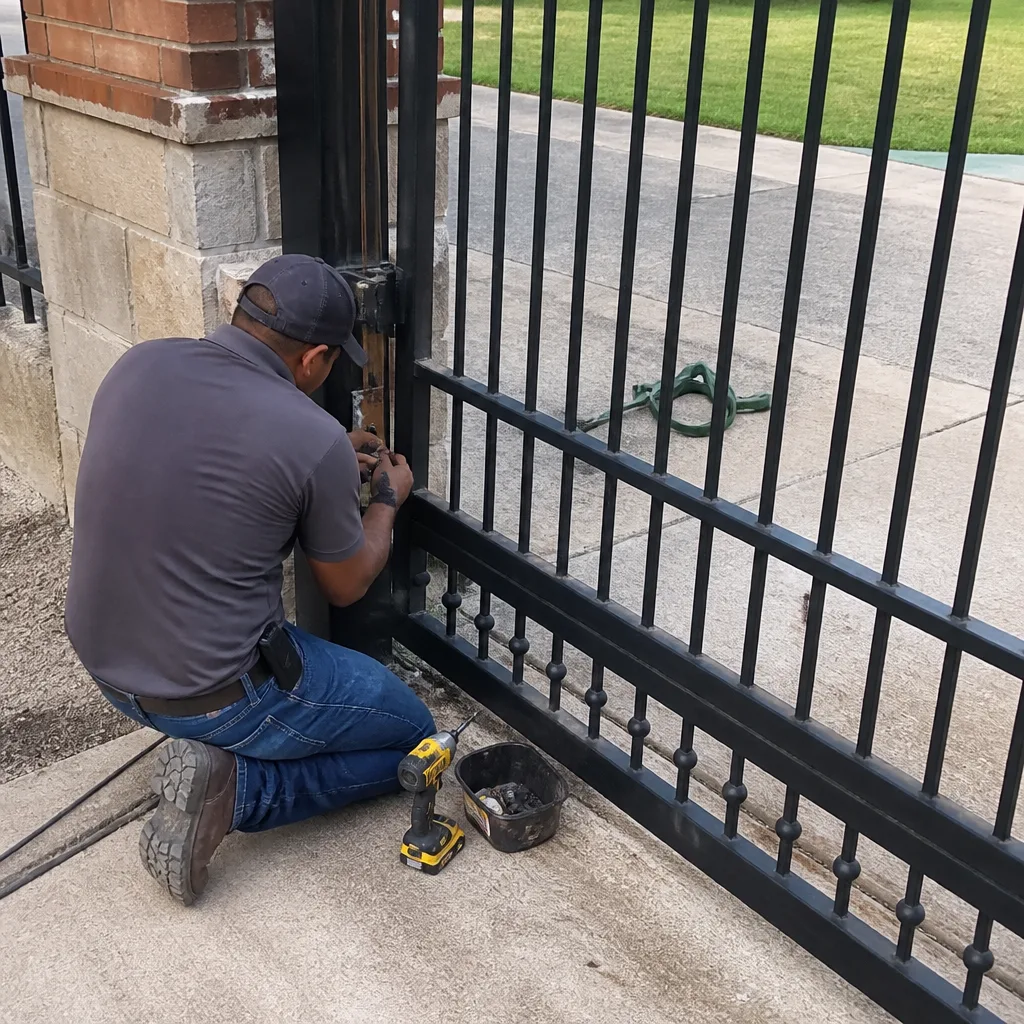 After
AfterGate Repair Warning Signs: A Sugar Land Homeowner’s Reference Guide
A gate that hesitates for two seconds before moving has already told you the motor is drawing excess current on startup. By the time it stops opening entirely, the motor has been running hot for weeks and the repair cost just tripled. Most Sugar Land homeowners replace a gate opener only after the failure is complete, because nobody ever explained which numbers to watch and which sounds to compare against. Our Gate Repair team sees this pattern every week. This guide gives you the specific, observable thresholds that separate normal gate behavior from a developing repair, so you can act while the fix is still measured in hours and hundreds instead of days and thousands.
Quick Answer
Gate failure in Sugar Land almost always announces itself two to four weeks early through measurable changes: cycle time that stretches more than 15%, grind or whine that wasn’t there before, a gate that stops more than an inch short of its normal travel, or rust bloom at ground-level welds. Watch for these thresholds, document them with a phone photo, and you’ll catch most repairs before a $200 limit-switch adjustment becomes an $1,800 motor replacement. For Seasonal Gate Repair Care for Sugar Land: Year-Round Homeowner’s Guide, check our seasonal maintenance tips.
Table of Contents
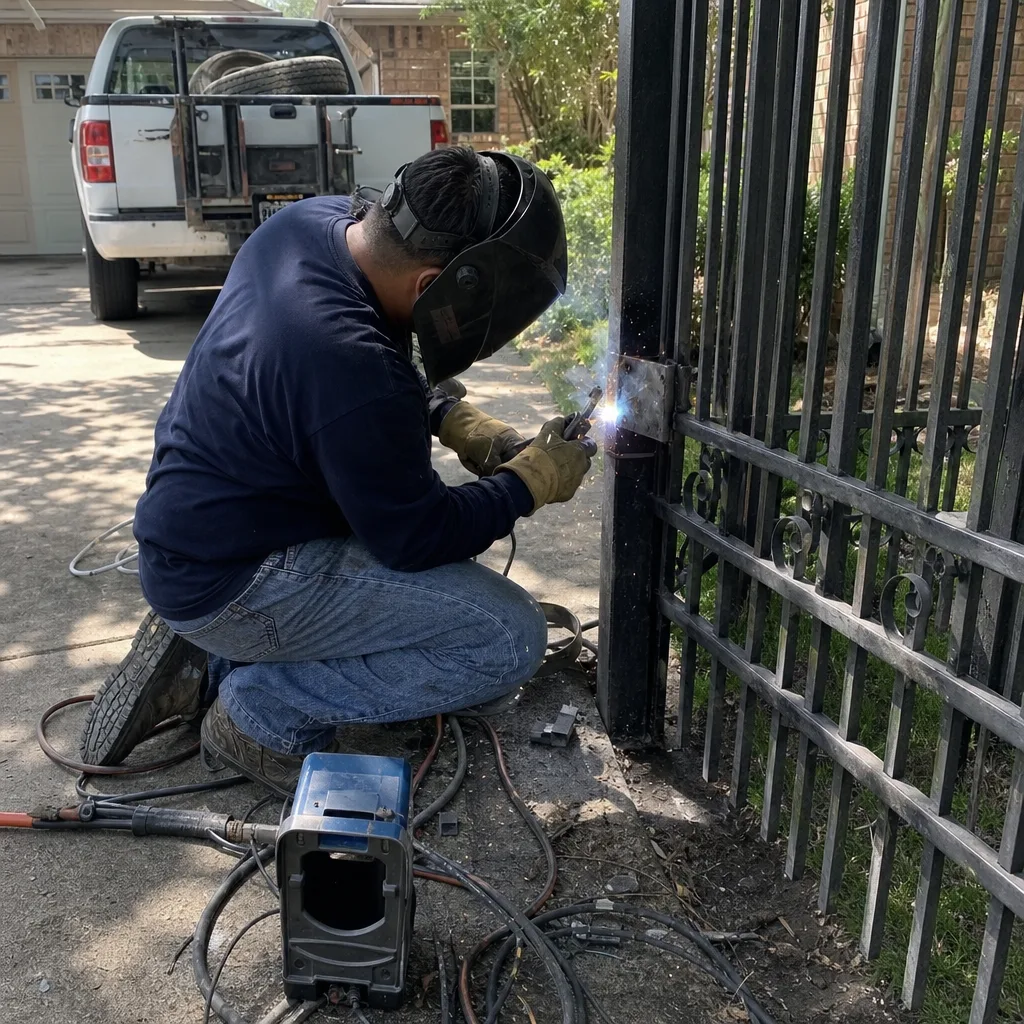
- The Measurable Thresholds: What Numbers to Watch
- Mechanical vs Electrical: Describing the Problem Accurately
- Sugar Land Conditions: What Our Climate Does to Gates
- Battery Backup vs Gearbox: Same Symptom, Different Repair
- How to Photograph and Timestamp Warning Signs
- What These Repairs Cost in Sugar Land
- Common Mistakes to Avoid
- When to Call a Professional
- Frequently Asked Questions
- The Bottom Line
BeforeAfterThe Measurable Thresholds: What Numbers to Watch
Gates do not fail randomly. They fail on a schedule, and that schedule leaves a paper trail if you know what to measure. We have worked on residential gates across Sugar Land since 2014, and the patterns are consistent enough to write down. Here are the three thresholds that matter most, with the numbers to record.
Cycle time increase of more than 15%
Every gate has a normal open-to-close duration. For a 16-foot swing gate on a LiftMaster LA400, that’s typically 14 to 18 seconds. For a slide gate on a FAAC 844, it might be 10 to 14 seconds. You do not need a stopwatch app, but you do need a baseline. Time the gate three times on a day when it feels normal and write the average on the inside of your garage door with a Sharpie. If that number grows by more than 15%, the motor is working harder than it should. The cause might be hinge wear, track debris, a sagging leaf, or a failing capacitor, but the number does not lie. In Sugar Land, where summer heat already pushes motors to their thermal limit, a 15% slowdown in June is often a motor that quits entirely in September.
Audible grinding frequency change
Every gearbox has a pitch. A healthy Mighty Mule or Elite operator whirs at a consistent frequency from start to finish. When a gear tooth chips or a bearing starts to oval, the pitch changes, usually dropping lower and adding a rattle or tick that repeats once per revolution. Record a 10-second video on your phone, then compare it to a video taken the same day next week. If the sound deepens or develops a rhythm, that is metal fatigue, and it will not fix itself. A grinding gate operator in Sugar Land’s humidity often fails faster than the same unit in a dry climate, because condensation inside the housing accelerates bearing corrosion once the gearbox seals degrade.
Travel stopping short by more than one inch
Your gate is programmed to open to a specific position and close to a specific position. Those positions are set by limit switches or magnetic limits, and they should be consistent within a quarter inch every single cycle. If the gate begins stopping more than one inch short of its usual position, something is changing. It might be a slipping clutch, a worn drive belt, a limit switch that has drifted out of calibration, or a physical obstruction bending the track. Photograph the closed position with the gate against its stop, then check the photo a week later. The gap tells you more than any sound ever will.
For a deeper walk-through of how these symptoms connect to specific repair work, see our Gate Repair in Sugar Land page, where we document the most common failure modes by gate type.
Mechanical vs Electrical: Describing the Problem Accurately
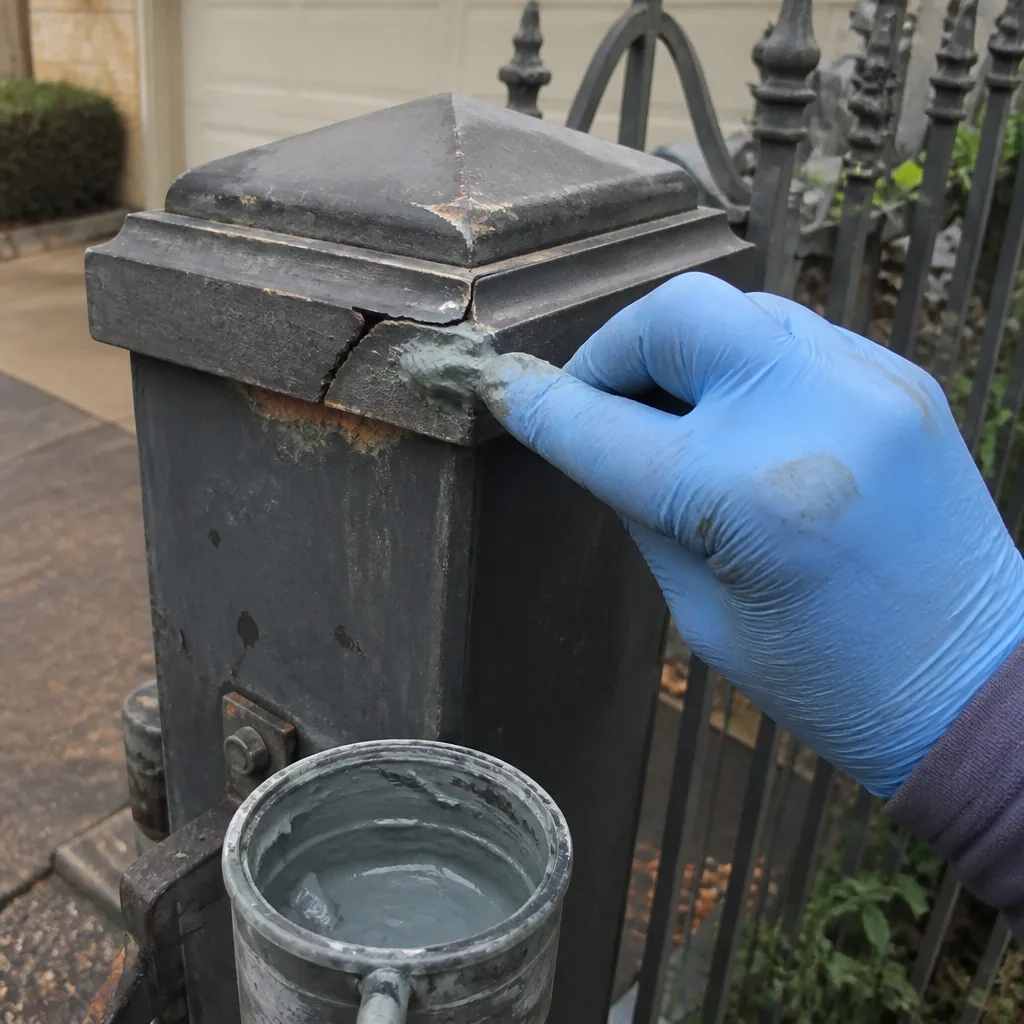
When you call a gate technician, the quality of the diagnosis you get on the phone depends on how accurately you describe the symptom. Mechanical problems and electrical problems produce different signatures. Knowing which world you are in before you dial saves a service call and often prevents a misdiagnosis.
Mechanical warning signs: hinge wear, track debris, post movement
- Hinge wear sounds like a creak or groan that follows the arc of the gate’s movement and stops when the gate stops. If the sound pauses at the same point in the travel every time, the wear is localized to one hinge.
- Track debris sounds like a rhythmic scrape with the gate’s ground wheel. On Sugar Land properties with limestone driveways or construction nearby, crushed rock and sand work into slide-gate tracks constantly. A single piece of gravel the size of a pea can cause the chain to jump a tooth.
- Post movement you feel rather than hear. Put one hand on the hinge post while the gate operates. Any vibration or movement means the post footer is shifting. In Sugar Land’s expansive clay soils, which swell and shrink with wet-dry cycles, gate posts shift more than most homeowners expect. A post that tilts just two degrees changes the gate’s entire geometry.
Electrical warning signs: board fault codes, erratic remote behavior
- Board fault codes flash on the control board itself. LiftMaster and FAAC boards display numeric or LED codes. If your opener has a small display or a blinking LED sequence, write those down. A technician can often identify the exact failed component from the code before arriving.
- Erratic remote behavior means the receiver, not the remote. If the remote works from 40 feet one day and only 8 feet the next, the problem is usually the receiver antenna, a failing capacitor on the control board, or 5G interference from a nearby tower. Sugar Land has dense cell coverage, and newer 5G installations have created interference issues we did not see five years ago.
- Intermittent start failures are almost always electrical. If the gate ignores the remote for three seconds and then responds, the board is not processing the signal cleanly. Mechanical problems do not hesitate; they resist.
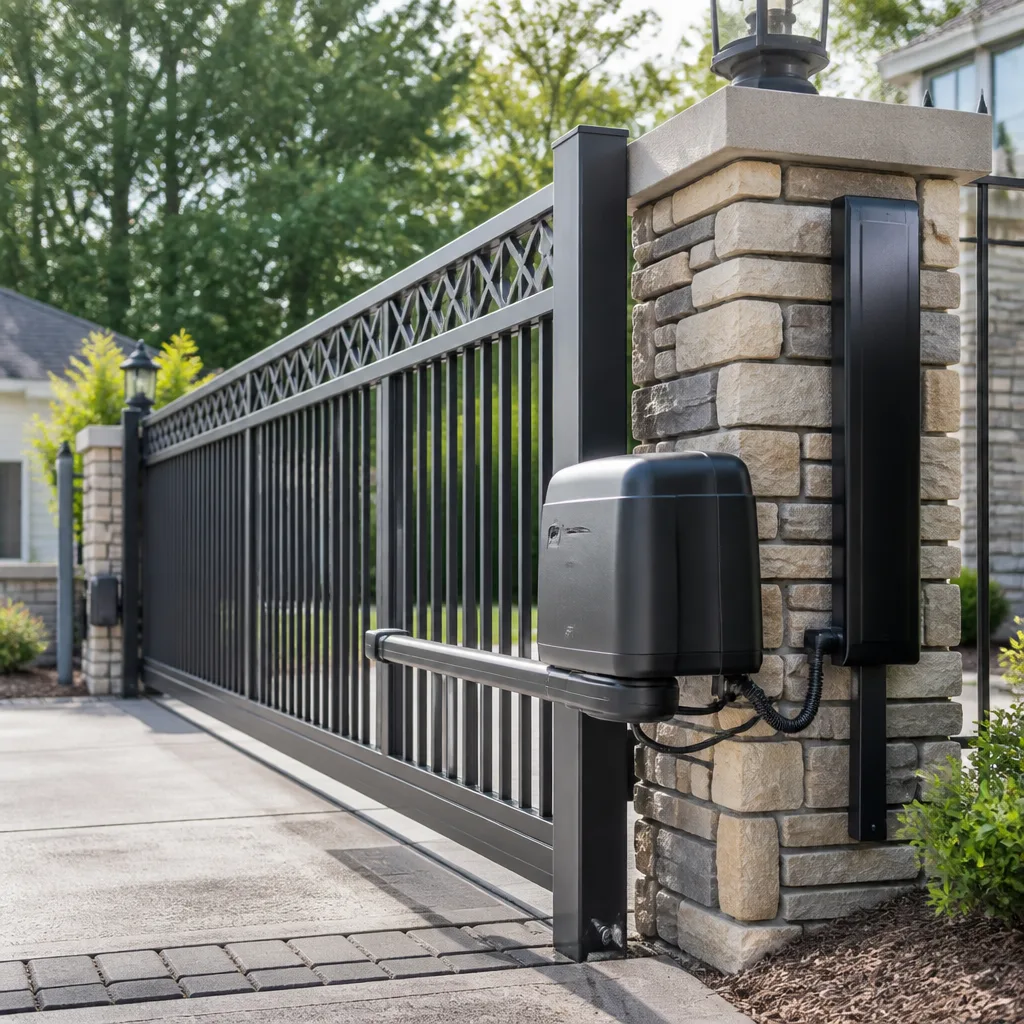
If the opener itself is the problem rather than the gate structure, our Gate Motor & Opener in Sugar Land page covers the common board, receiver, and capacitor failures we see by brand.
Sugar Land Conditions: What Our Climate Does to Gates
Sugar Land gate repair has two recurring characters that almost never appear in generic online guides: expansive clay soil and high-rainfall humidity. Both are local, both are measurable, and both leave specific fingerprints on a gate long before failure.
Rust bloom at ground-level welds
When a steel gate sits in contact with soil moisture, the first visible sign is not structural failure. It is rust bloom: a raised, flaking orange-brown crust where the vertical pickets meet the bottom rail or where the gate frame meets the hinge plate. In Sugar Land, where the water table is high and winter rains saturate the ground for weeks, rust bloom appears on powder-coated steel gates within three years of installation if there is any scratch, chip, or weld porosity at the base. The bloom is cosmetic only until the rust penetrates the tubing wall, which typically takes another 18 to 24 months. You have that window. If the bloom is less than two inches wide, a grinder and a cold-galvanizing treatment usually stop it. If the bloom extends across more than four pickets, the bottom rail has likely lost enough wall thickness to need sectioning or replacement. Photograph the bloom with a coin or key for scale and check it monthly.
Post-tilt visible only at certain times of year
Sugar Land’s clay soil shrinks during dry spells and swells during wet ones. A gate post set in this soil can move measurably with the seasons without ever being hit by anything. The telltale sign is a diagonal gap opening at the top or bottom of the gate leaf relative to the latch post. During the dry season, the clay contracts and the post leans outward, so the top gap opens. During the wet season, the clay expands and the post can actually push back, closing the gap. If you notice the gate latching perfectly in January and catching in August, you are watching seasonal post movement, and it is progressive. The fix is not repeated latch adjustment; it is post stabilization, usually with helical piers or a deeper concrete footer. Have a technician measure the post with a magnetic angle finder during the dry season, when the movement is most visible.
For homeowners looking at new gate work rather than repairs, our Gate Installation in Sugar Land page discusses how we address Sugar Land soil conditions at the construction stage.
Battery Backup vs Gearbox: Same Symptom, Different Repair
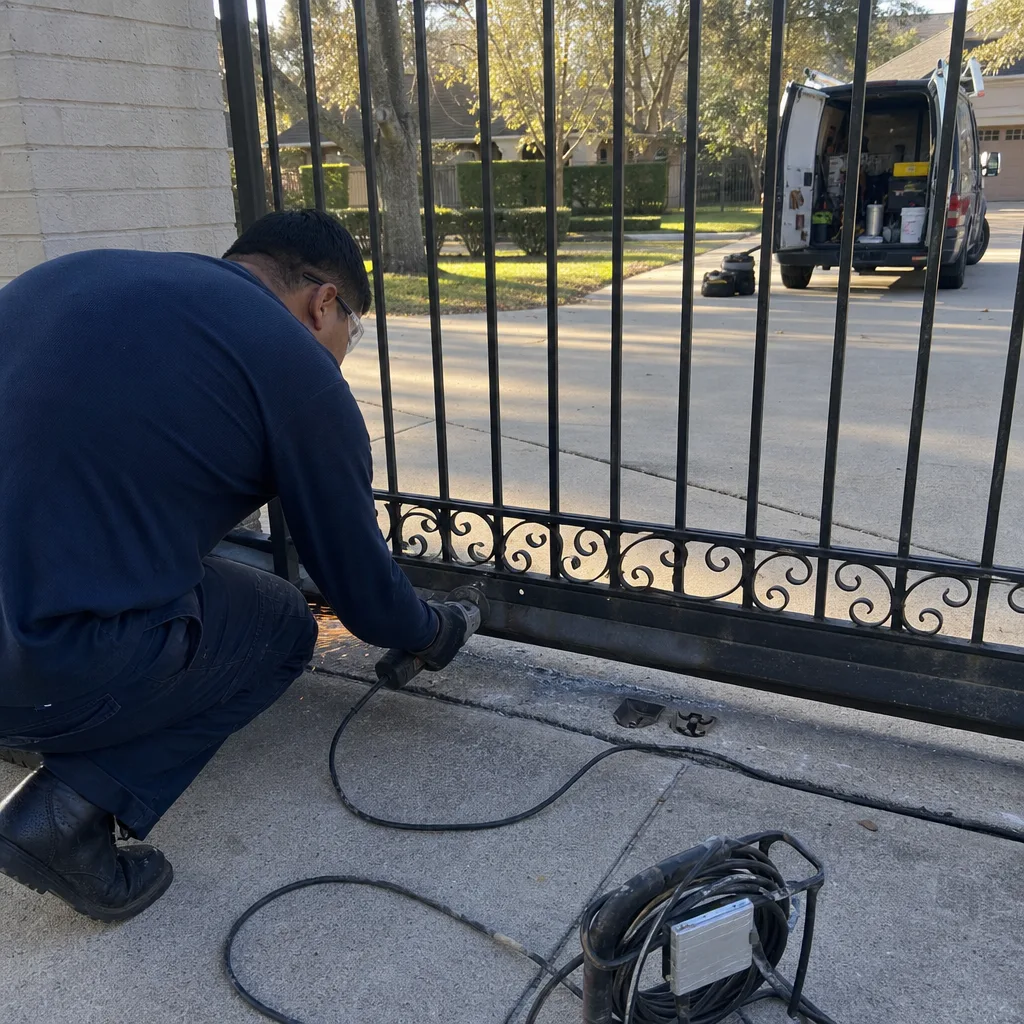
Slow gate operation is the most commonly misdiagnosed symptom in residential gate repair. A gate that opens more slowly than it used to can indicate either a failing battery backup or a failing gearbox. The treatments are completely different, and choosing wrong costs money for parts you do not need.
What a failing battery backup sounds like
A battery backup does not power the gate during normal operation. It sits charged and idle, and it only works during a power outage. But a failing battery can still slow the gate, because the charging circuit draws more current from the board to maintain a battery that will not hold voltage. The symptom is a gate that sounds normal but labors, as if running through molasses, with no change in the motor’s pitch. The operator’s control board may show a battery fault LED. On a LiftMaster or FAAC unit, the battery should be load-tested with a meter; a healthy battery holds above 12.4 volts under load. A battery below 11 volts under load is done, and the repair is a battery replacement, usually $85 to $160 depending on the amp-hour rating.
What a failing gearbox sounds like
A failing gearbox changes the sound of the motor itself. There is a metallic whir or grind, often coupled with jerky, uneven motion. The motor is running at full speed, but the gears are slipping or chipped, so the gate hesitates, jerks forward, pauses, and resumes. Some homeowners describe it as the gate “chattering.” A gearbox failure on common residential operators typically runs $220 to $480 for the part plus labor, depending on the brand. On an Elite or Mighty Mule unit, the gearbox is often sold as an assembly with the motor, which pushes the repair higher.
The diagnostic test is simple: operate the gate and listen. A smooth, labored motion points to electrical delivery (battery or capacitor). A jerky, noisy motion points to mechanical transmission (gearbox, belt, or chain). Describe which of the two you are hearing when you call, and the technician knows what to bring.
How to Photograph and Timestamp Warning Signs
Evidence changes the economics of gate repair. When a technician arrives with your time-stamped photos showing exactly what the gate looked like two weeks before the visit, the diagnostic phase shrinks, and you do not pay for a technician to spend an hour re-finding what you already found. Here is the method we recommend to Sugar Land homeowners.
- Shoot the same angle every time. Choose three positions: the closed gate from the driveway, the hinge plate close-up from the inside, and the control board with the cover open. Use the same three positions every time you document. Your camera roll becomes a timeline.
- Include a reference object in close-up shots. A quarter, a key, or a Sharpie provides scale for cracks, gaps, and rust bloom. A photo without scale tells a technician nothing about severity.
- Record 10 seconds of video with the gate operating. Hold the phone steady, frame the gate’s arc, and record the full open or close cycle. The motor’s pitch, the gate’s speed, and the jerky hesitations are all audible on playback.
- Timestamps happen automatically. Your phone stamps the photo. Do not crop or re-save it through an editing app, which can strip the EXIF data. Send the original file.
- Keep a running note. A one-line note in your phone with date, symptom, and photo count is enough. “March 14: gap at top latch grew to 1/2 inch, photo 3 of 6.” That record is what lets a technician see a trend instead of a snapshot.
We maintain the same discipline on our side. Under Haven Standard Clause 4, every Vance Gate Repair visit leaves a documented photo record: what was found, what was adjusted, and what was installed. The record is yours. When a homeowner hands us a timeline of their own photos, the repair conversation changes from a diagnosis to a confirmation. Browse more guides & resources to learn what else to document.
What These Repairs Cost in Sugar Land
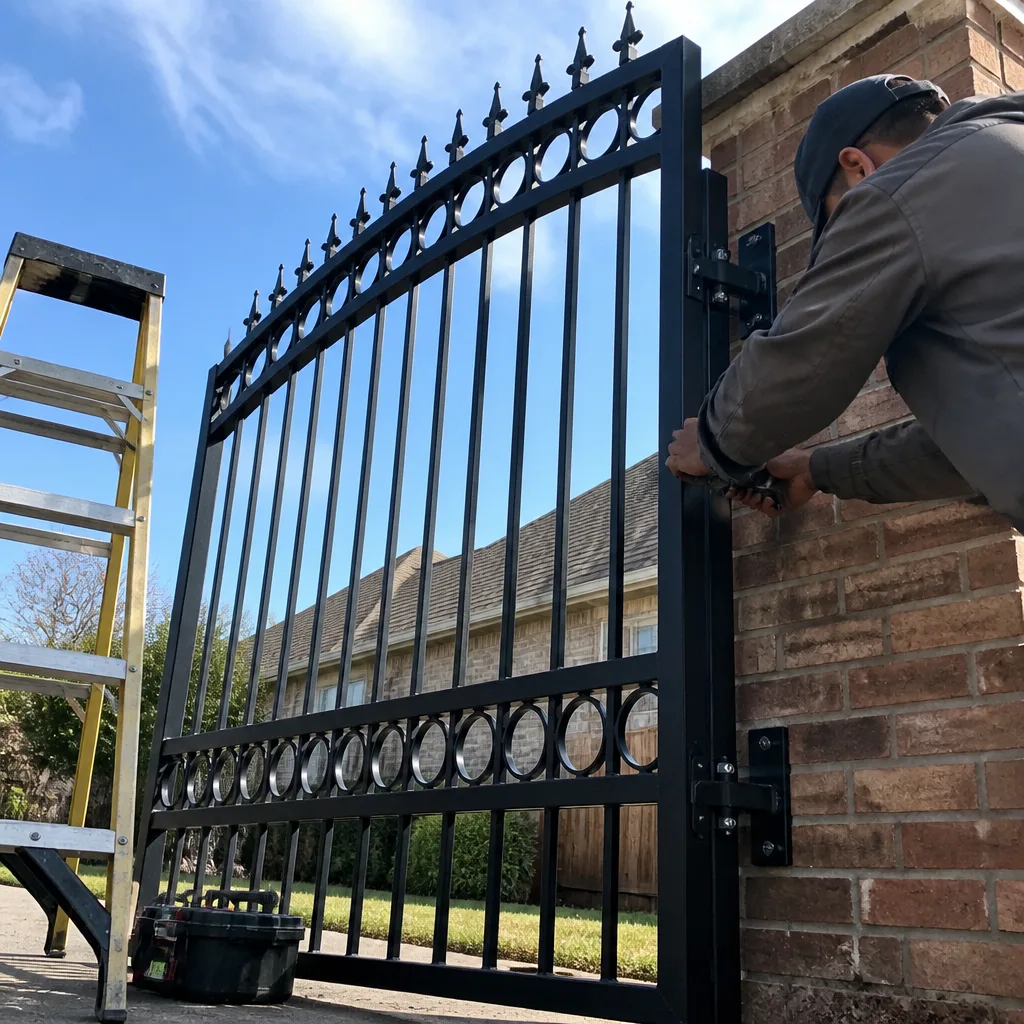
Sugar Land gate repair pricing runs below Houston metro averages for small mechanical work but right at market for motor and control-board replacements, because parts are shipped from the same suppliers. Here are the ranges we quote most often, written in advance so you know what to expect before you call anyone.
- Limit switch adjustment or replacement: $90 to $180. The most common repair for “gate stops short.”
- Photo-eye alignment or replacement: $75 to $150. A misaligned photo-eye is the most common cause of “gate won’t close.”
- Hinge replacement (single residential leaf): $180 to $350, depending on gate weight and hinge type.
- Battery backup replacement: $85 to $160.
- Control board replacement (LiftMaster, FAAC, Elite): $280 to $650, depending on the board generation and surge damage.
- Gearbox replacement (common residential units): $220 to $480 plus labor.
- Full opener replacement (motor, arm, receiver assembled): $950 to $2,400, depending on brand, gate weight, and whether the arm bracket is intact.
- Rust remediation at ground-level welds: $150 to $500, depending on the number of affected pickets and whether the bottom rail needs sectioning.
Every price above is a flat, written number before any work starts. That is Haven Standard Clause 1: written price, handed over, no surprise invoice at the end. If another company has quoted you something different, bring the paperwork to us for a free second opinion. We will tell you if their number is fair before you pay it.
Common Mistakes to Avoid
- Lubricating the problem away. Spraying WD-40 on a grinding gearbox buys a quieter week and then makes the failure worse, because WD-40 is a solvent, not a gear lubricant. It strips the remaining grease and accelerates wear.
- Adjusting the limits repeatedly instead of finding the cause. If the gate keeps stopping short, moving the limit switch further masks the real issue. Each adjustment hides more of the problem and makes the eventual repair more expensive.
- Ignoring seasonal post movement. Sugar Land clay expansion and contraction is not a one-time event. If your gate only mis-latches during droughts or wet seasons, the post is moving, and latch adjustment is a bandage on a broken bone.
- Replacing the remote when the receiver is the problem. If two remotes behave erratically, the fault is almost never in both remotes. It is the receiver or the board.
- Power-washing the gate without sealing it afterward. A pressure washer forces water into crevices that were previously dry. On Sugar Land’s humid days, that trapped moisture accelerates rust bloom at welds and inside tubing.
- Waiting until the gate fully stops to call. By the time the motor overheats and trips permanently, the damage has typically spread from the original component to the transformer, capacitors, and sometimes the board. Early intervention is usually a one-part repair.
- Not testing the gate during a power outage. A battery backup that has never been discharged is one you cannot trust. Test it quarterly by cutting power and running the gate once. If it will not move under battery load, replace before hurricane season, not during it.
When to Call a Professional
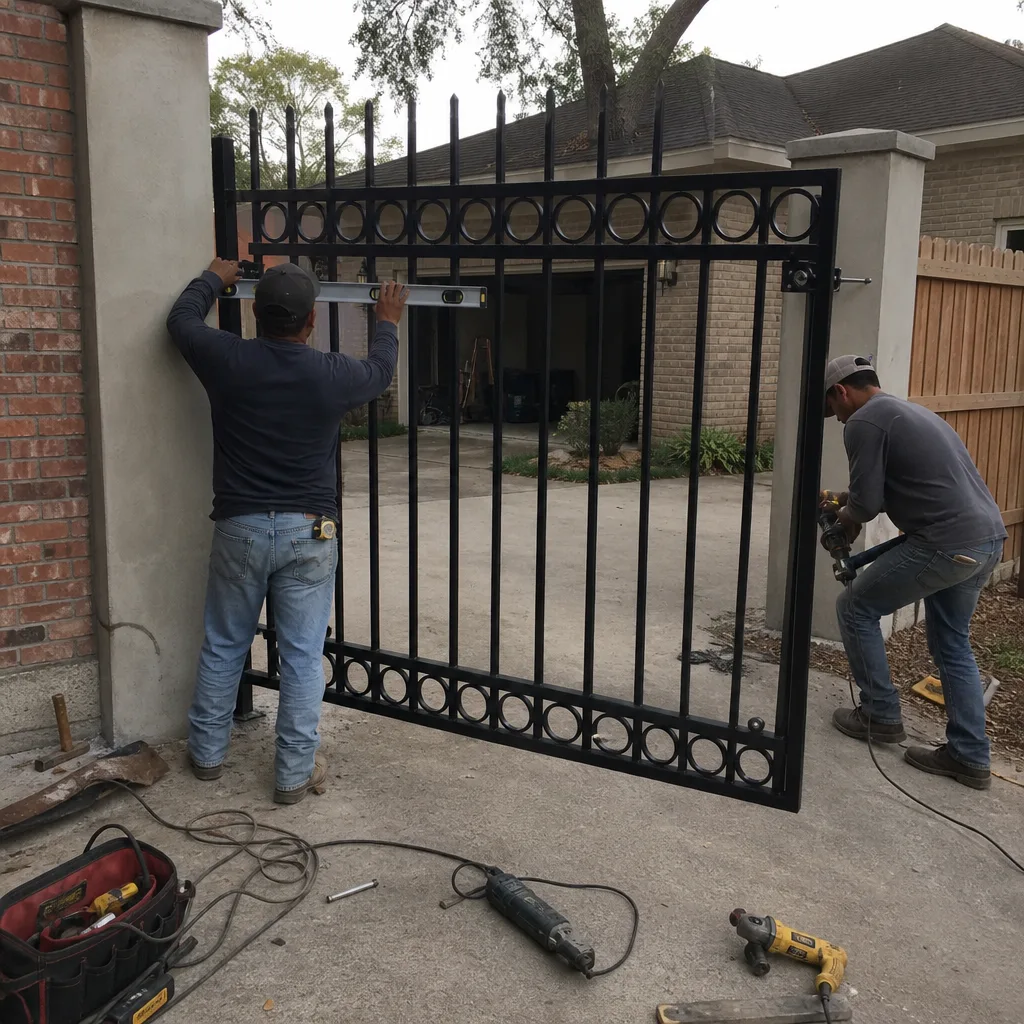
Call a professional when you have documented two consecutive weeks of the same symptom: a cycle time increase over 15%, a new grinding or clicking sound, travel stopping more than an inch short, or rust bloom spreading across more than two pickets. Also call if the gate has mis-latched, sparked, or buzzed, or if the control board is flashing a fault code. High-tension components like gate springs and cables carry enough stored energy to cause serious injury if they let go, so the repair itself is not a DIY task. Vance Gate Repair Sugar Land offers free estimates in Sugar Land: call (346) 295-3437 and a live person answers, whether it is noon or 3 a.m. We will schedule a technician, write the flat price before touching the gate, and leave you with a photo record of the work.
Frequently Asked Questions
Your gate is likely two to four weeks from failure if it opens more than 15% slower than baseline, grinds or clicks in a repeating rhythm, or stops more than an inch short of its normal travel. Any two of those three signs together is a near-certain pending repair.
A failing opener sounds like a low grind, a rhythmic tick, or a metallic whir that was not there when the unit was new. The sound follows the motor, not the gate’s movement, and it usually deepens over successive weeks.
Most Sugar Land gate repairs run between $90 and $500 for mechanical fixes like limit switches, hinges, photo-eyes, and battery replacements. Motor and control-board replacements run $280 to $2,400 depending on brand, gate weight, and whether the failure is isolated to one component. Call (346) 295-3437 for a free written estimate.
For diagnosed electrical and mechanical repairs, same-day scheduling is often available in Sugar Land when the part is on our van inventory. We will tell you on the phone whether the part needs to be ordered, and the written price covers the full job before work starts. Call (346) 295-3437 and describe what you are hearing.
Sugar Land summer heat pushes motors toward their thermal limit, and if the motor is already struggling with hinge wear, track debris, or low voltage, the heat makes it worse. A gate that only coughs in August still needs repair before the next heat wave makes it permanent.
We service nine major gate-automation brands, including LiftMaster, FAAC, Elite, Mighty Mule, BFT, Linear, Viking, Ghost Controls, and DoorKing. You do not need to replace your existing opener to match our service; we work on what is already on the property. Call (346) 295-3437 with your brand and symptom for a free estimate.
The Bottom Line
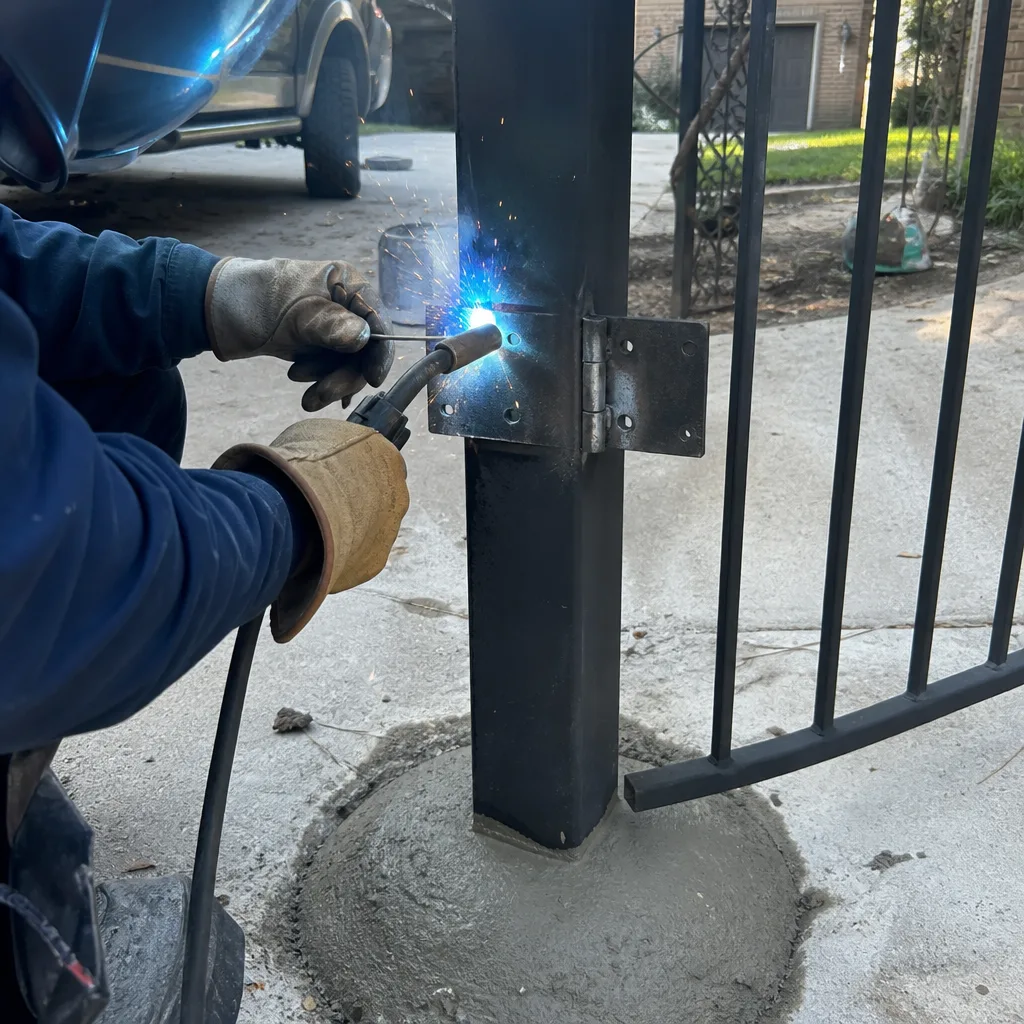
Gate failure is measurable weeks in advance if you know which numbers to watch and which sounds to compare. A 15% cycle-time increase, a new grinding pitch, a one-inch travel shortfall, and rust bloom at ground-level welds are the four Sugar Land warning signs that matter most. Photograph them as they develop, check the gate quarterly for seasonal post movement, and call when you have two consecutive weeks of the same symptom. The repair is almost always cheaper and faster when the evidence is fresh. Vance Gate Repair Sugar Land prices in writing before any work, documents every visit with photos, and stands behind each repair for a full year. For a free estimate in Sugar Land, call (346) 295-3437, or visit the Vance Gate Repair Sugar Land home page to learn how we work.
Written by Adrian Vance, Owner at Vance Gate Repair Sugar Land, serving Sugar Land since 2014.