
Last updated September 20, 2026
Free on-site gate assessment - hinges, posts, and your LiftMaster or Nice gate operator checked before anything is quoted
The assessment is free and the quote is the invoice.
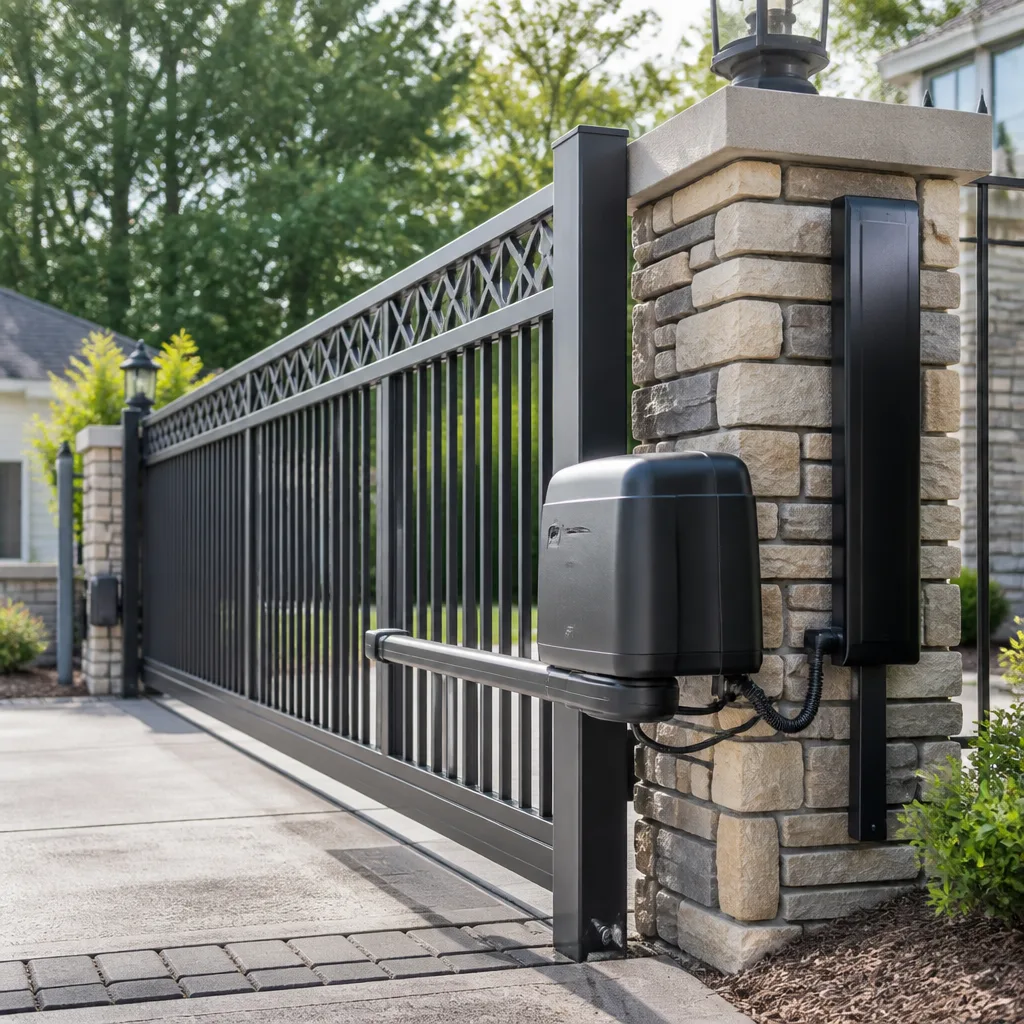
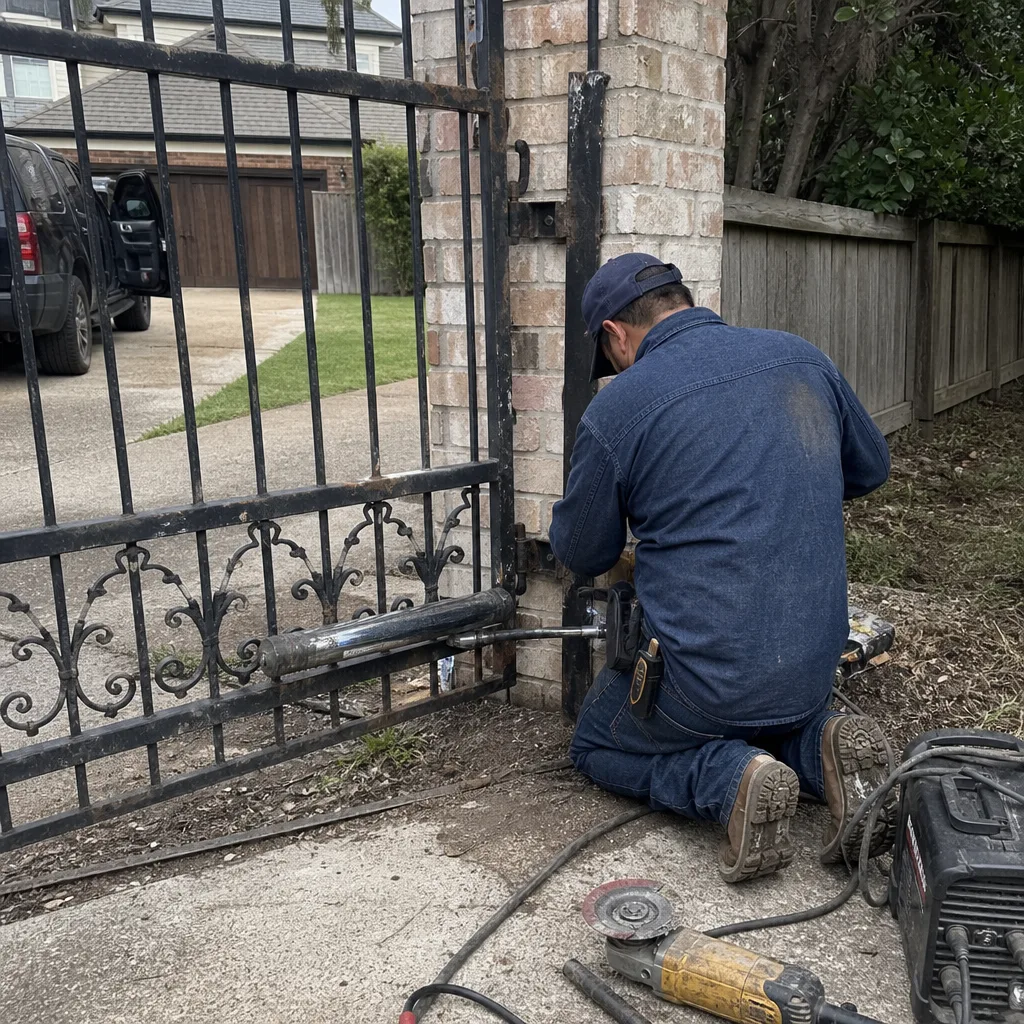 Before
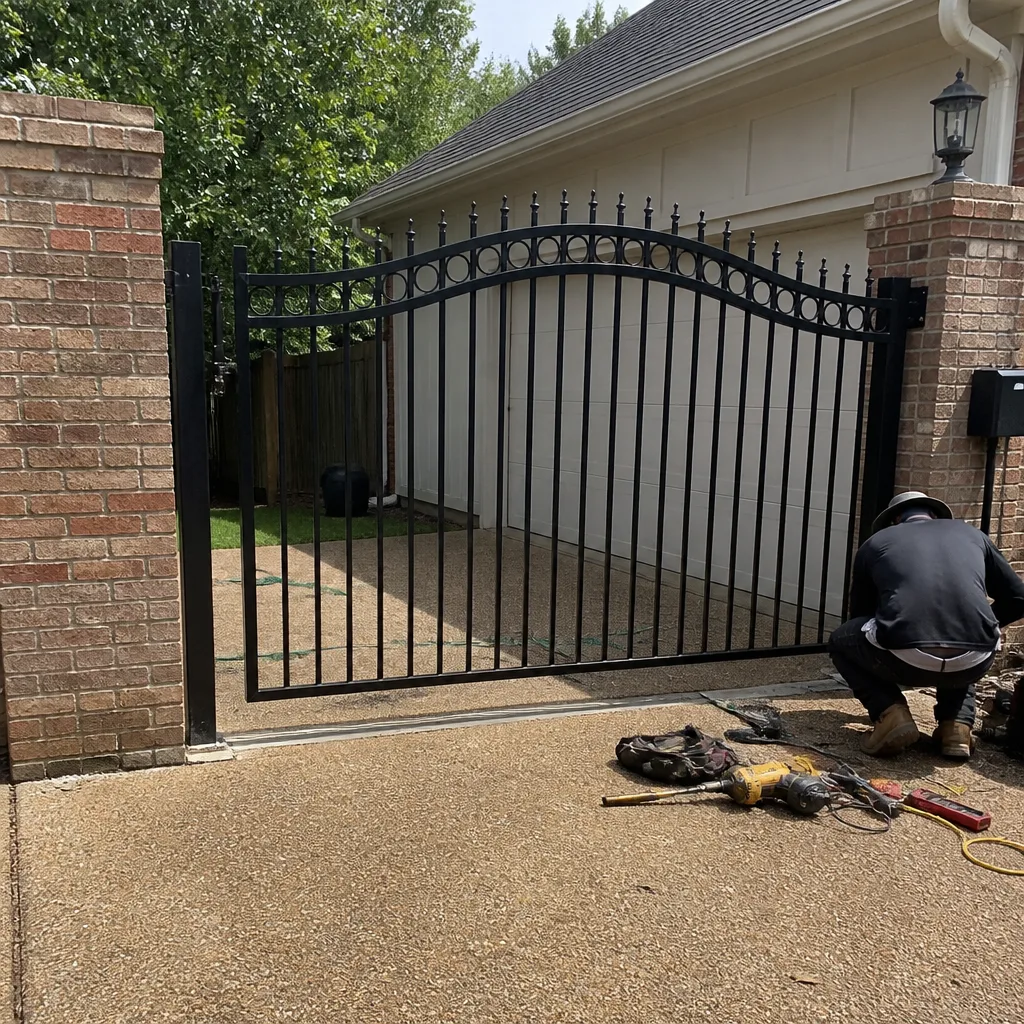 After
After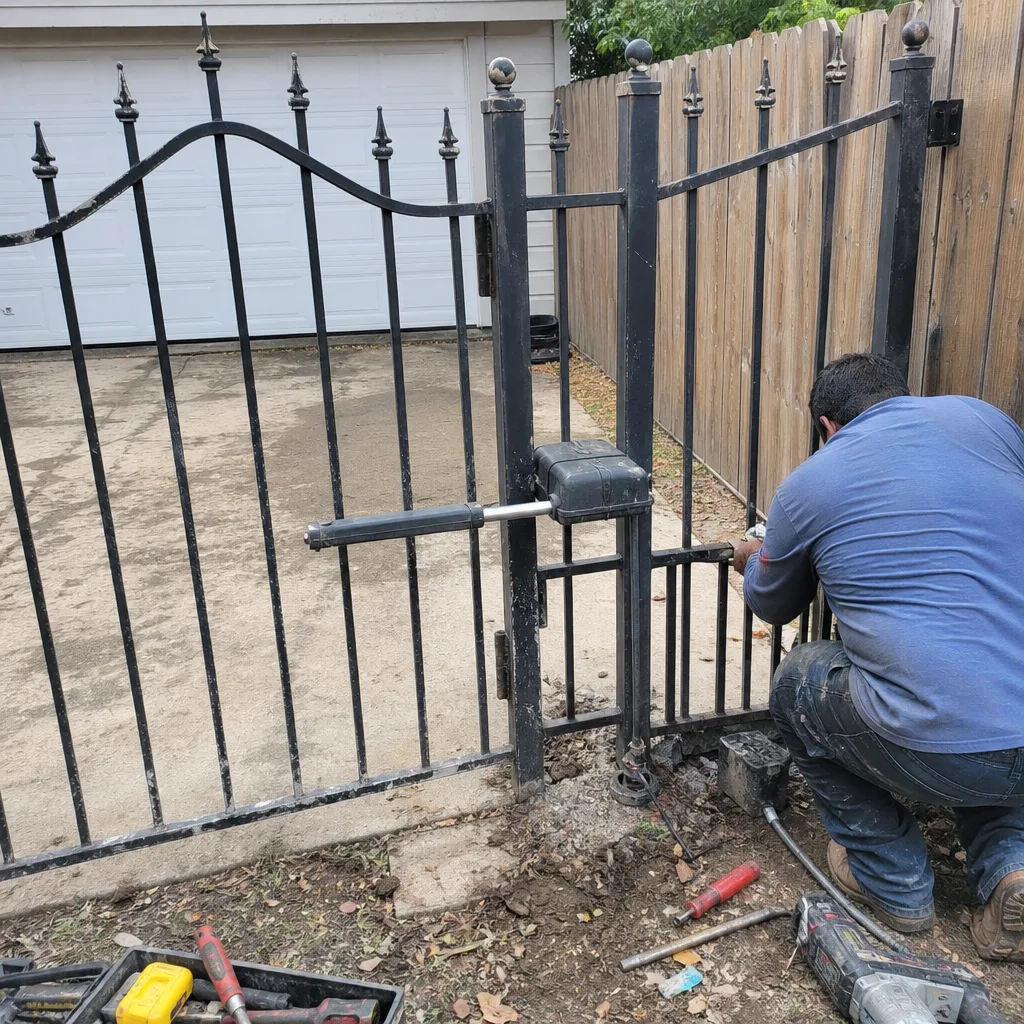 Before
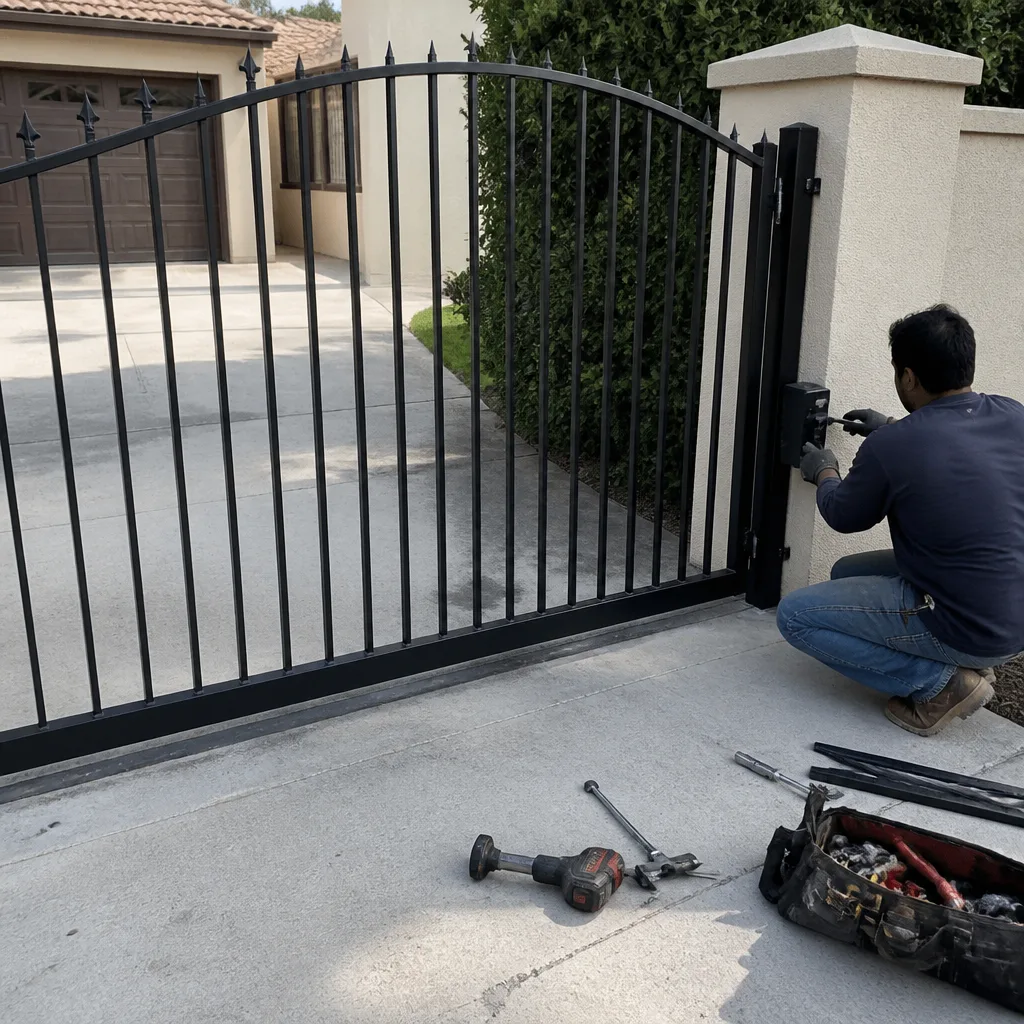 After
After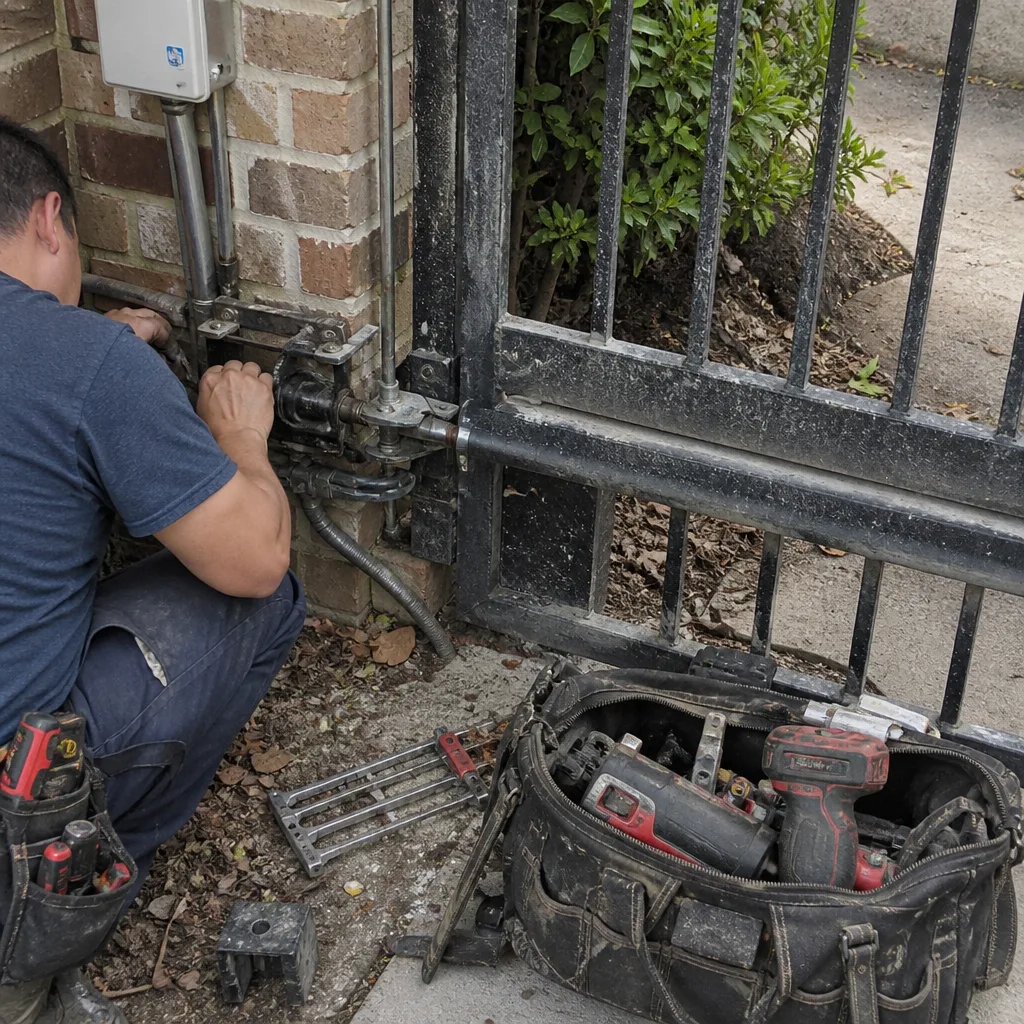 Before
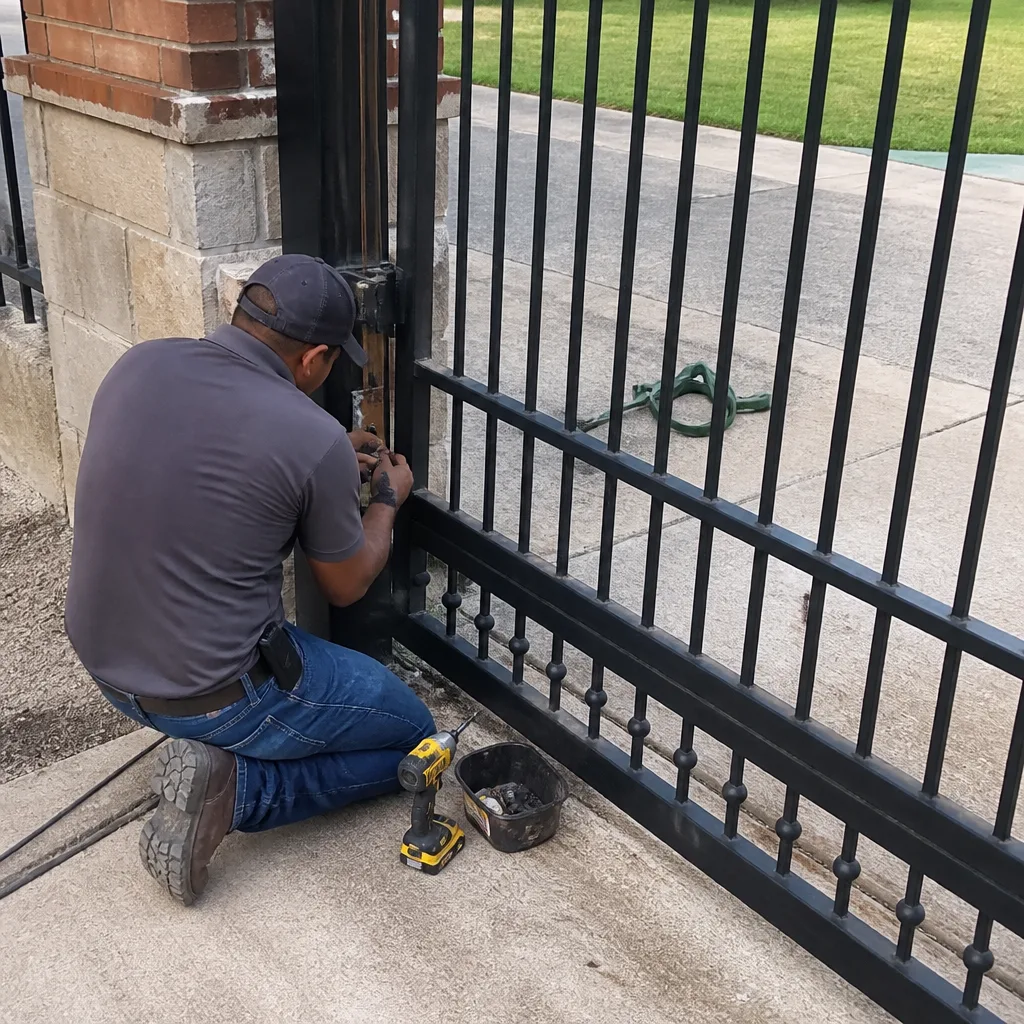 After
AfterGate Repair Permits, Codes & Inspections in TX: What You Need to Know
Swapping a gate operator for an identical model is a repair. Upgrading to a higher-voltage system or relocating the control panel crosses into alteration territory in many Texas municipalities, and that distinction shows up on a real estate disclosure, not a contractor invoice. In Sugar Land, we hear the same story at least once a month: a homeowner spent money on gate work five years ago, and the title company just flagged an unpermitted alteration during a sale. This guide walks through the actual thresholds, the UL 325 requirements that apply regardless of permit status, and the paperwork you should keep after any gate repair job in Fort Bend County.
Quick Answer
Most residential gate repairs in Texas, including Sugar Land, do not require a city permit when they replace like-for-like components: same motor, same voltage, same post locations. The moment the work adds new electrical service, relocates a control panel, replaces structural posts, or changes the gate’s footprint, you may need a permit, and HOA architectural review can apply even when the city requires nothing.
Table of Contents
- Repair vs. Alteration: Where the Permit Line Actually Falls
- Sugar Land and Fort Bend County: Specific Permit Triggers
- HOA Architectural Review vs. Municipal Permits
- UL 325 Compliance: What It Means and When a Violation Exists
- How to Get a Written Code Interpretation Before Work Begins
- Documentation to Keep After Permitted Gate Work
- Common Mistakes to Avoid
- When to Call a Professional
- Frequently Asked Questions
- The Bottom Line
BeforeAfterRepair vs. Alteration: Where the Permit Line Actually Falls
The Texas permit threshold for gate work is rarely about the gate itself. It’s about what the work touches: electrical service, structure, or the gate’s operational footprint. A repair keeps everything where it was and swaps a failed part for an equivalent. An alteration changes voltage, amperage, post depth, gate weight, or travel limits.
Here’s how the distinction plays out in the field:
- Replacing a swing gate motor with the same brand and voltage is a repair. If a LiftMaster LA400 fails and we install another LA400 on the existing mount, no city permit is triggered in Sugar Land. The electrical load is unchanged, and the post wasn’t moved.
- Replacing a failed capacitor, limit switch, or control board inside an existing operator enclosure is a repair. These are component-level swaps that don’t alter the system’s electrical profile.
- Upgrading from a 12V DC solar-powered operator to a 120V AC hardwired unit is an alteration. You are adding a new electrical branch circuit, and that work falls under NEC Article 430 and 110.26 clearance rules. A permit is generally required.
- Relocating a control panel from one side of the driveway to the other is an alteration. The physical move requires a new conduit run, which is new electrical service even if the panel itself is reused.
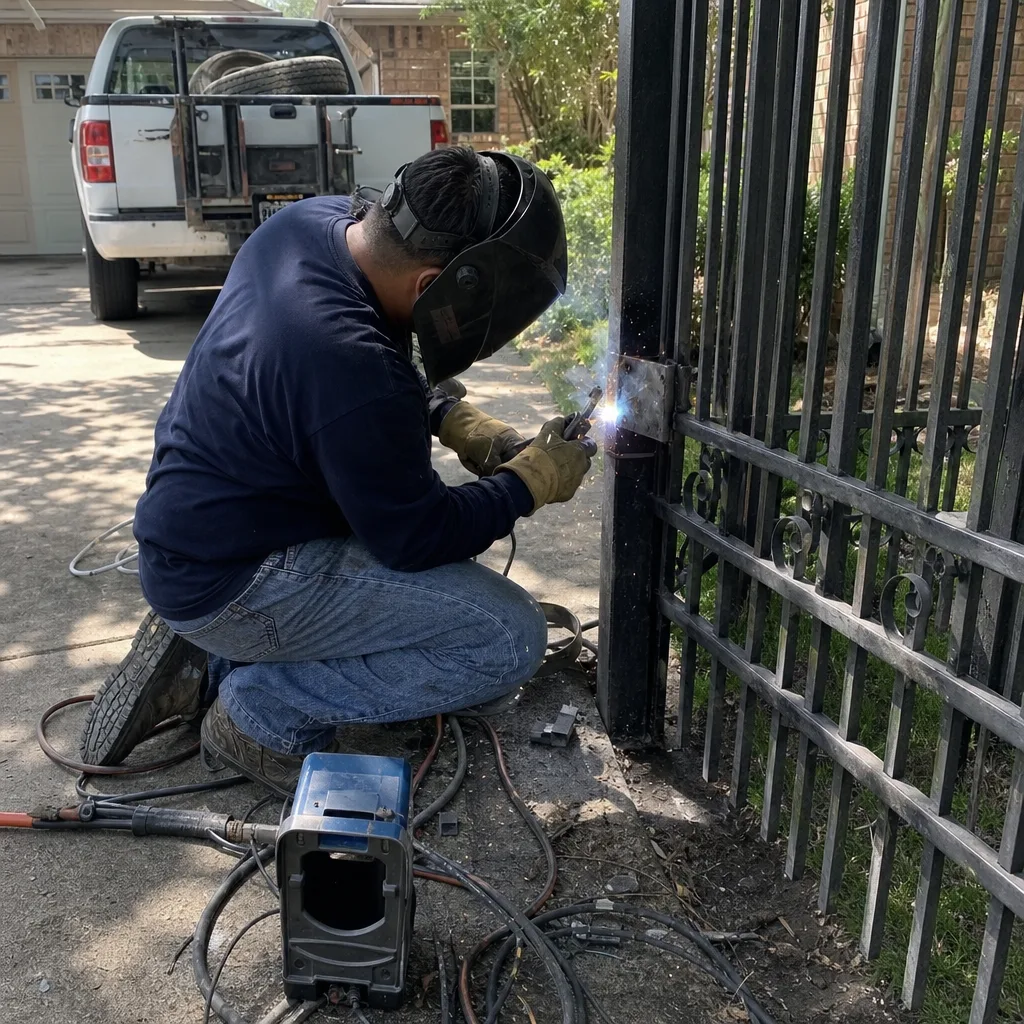
- Replacing a rotted wood gate post with a steel post set in a deeper footing is an alteration. The structure changed. Some municipalities in Texas treat any post replacement as an alteration because the gate’s load path is different.
- Widening a driveway gate opening by more than 12 inches is an alteration. The gate’s weight, wind load, and operator sizing all change. In Sugar Land, widening a driveway entrance may also trigger a right-of-way review if the gate is within city setback lines.
The pattern: if we can point to the old part and the new part on a bench and say they’re functionally identical, it’s a repair. If the work requires new wire pulls, new breaker sizing, or new footings, that’s where a permit conversation starts.
Contractors who minimize this distinction are usually trying to save you a few hundred dollars in permit fees. The problem is that the savings transfer to the next owner as a title defect, and in Fort Bend County, title companies are checking for open permits on gate-related electrical work more aggressively than they did ten years ago.
Sugar Land and Fort Bend County: Specific Permit Triggers
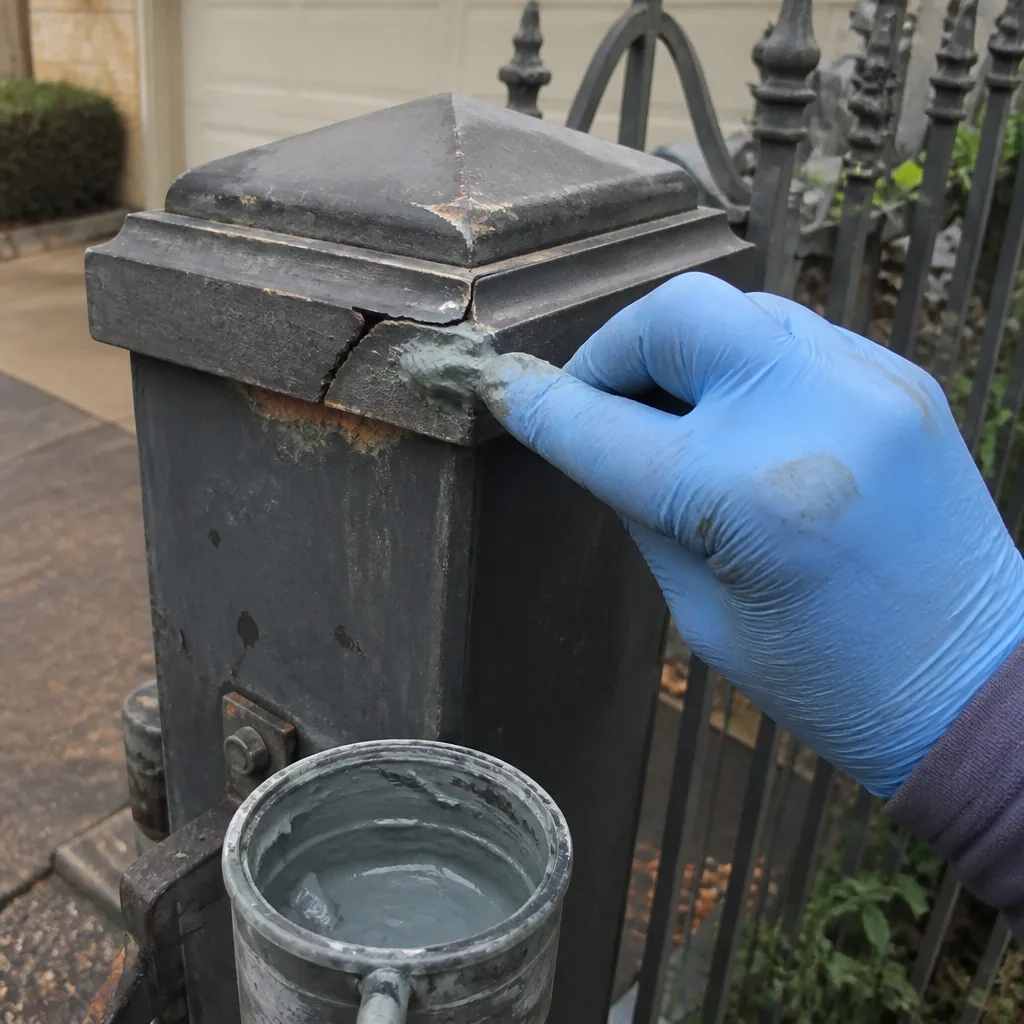
The City of Sugar Land adopts the International Residential Code (IRC) and the National Electrical Code (NEC) with local amendments. Fort Bend County takes jurisdiction for unincorporated areas, which matters because large parts of what people call “Sugar Land” are technically county land: Riverstone, parts of New Territory, and scattered parcels along University Boulevard fall outside city limits.
Here are the specific triggers in Sugar Land’s permitting practice:
- New electrical branch circuits for gate operators. If a gate motor upgrade requires a new breaker, a new conduit run, or a new disconnect, Sugar Land requires an electrical permit. This is the most common gate permit we see.
- Any gate operator on a commercial property or a residential property zoned for commercial access. Sugar Land’s commercial gate code requires UL 325 compliant safety devices at every entrapment zone, and the permit office cross-references the gate’s safety certificate before issuing a certificate of occupancy.
- Structural post replacement when the new post exceeds 4 feet of embedment or carries a gate wider than 8 feet. This triggers a structural review under Chapter 18 of the city’s adopted IRC. The threshold exists because a 16-foot steel gate on a 3-foot post generates enough wind load to fail the post in a tropical storm event.
- Driveway gate installation within the city right-of-way or within 15 feet of the property line at the driveway approach. Sugar Land enforces a sight-distance triangle at every driveway approach, and a gate that sits inside that triangle can be ordered moved. The city doesn’t issue a permit for this; it issues a code enforcement notice, which is worse.
- Any gate operator connected to a fire access point or an HOA-mandated emergency access lane. Fort County fire code requires that any gate blocking emergency vehicle access must have a Knox key switch or an approved siren-activation device. Work on these gates requires a fire code review even when the electrical work is a straight replacement.
For unincorporated Fort Bend County parcels, the triggers are functionally the same, but the enforcement path is different. The county doesn’t inspect electrical work the way Sugar Land does, but any alteration that shows up on a plat survey or a title search that doesn’t have a matching county permit can delay a closing by weeks.
Most gate repair in Sugar Land that we handle involves none of these triggers. A failed Mighty Mule arm, a stripped gear, a misaligned photo-eye: these are component-level repairs that don’t touch the permit system. But when a customer asks us to upgrade from a solar panel to hardwired AC, the first thing we do is check the electrical panel for spare capacity and then talk about whether the job is a repair or an alteration.
HOA Architectural Review vs. Municipal Permits
You can need HOA approval even when the city requires nothing, and in Sugar Land, that’s the rule rather than the exception. First Colony, Telfair, Riverstone, Greatwood, and Sienna all have architectural review committees that claim jurisdiction over gate appearance, gate height, and sometimes even operator brand.
The two systems don’t talk to each other. Sugar Land’s permit office doesn’t notify an HOA, and an HOA’s architectural approval doesn’t satisfy the city’s electrical permit requirement. Homeowners who assume one covers the other find out the mistake when the HOA sends a deed restriction letter or the city flags an open permit at closing.
Here’s what HOA review typically covers in Sugar Land communities:
- Gate design and finish. Wrought iron, powder-coated aluminum, wood, or composite: the HOA wants to see what the gate looks like before installation. A vinyl gate in a deed-restricted neighborhood with a wrought-iron standard will get rejected.
- Gate height and opacity. Many Sugar Land HOAs cap driveway gate height at 6 feet and require a minimum of 50% open visibility. A solid 8-foot privacy gate is a common rejection, not an uncommon one.
- Operator placement and enclosure color. HOAs often require that the operator and control box be painted to match the fence or screened by landscaping. A bright gray control box on a black iron fence will generate a letter.
- Lighting and photo-eye placement. If you’re adding gate post lighting or retro-reflective safety markings, the architectural committee typically wants to review the fixture type and placement before you buy anything.
The practical order of operations: submit to the HOA first, because their review is usually slower and more subjective than any city permit. Then, if the project is an alteration under the city’s definitions, file for the electrical permit. Some Sugar Land HOAs will condition approval on proof of a city permit when the work clearly warrants one, and having the HOA approval in hand first avoids sending the city permit back through committee review.
For a deeper look at what a full installation covers, including the HOA-facing documentation we prepare, see our gate installation guide for Sugar Land.
UL 325 Compliance: What It Means and When a Violation Exists
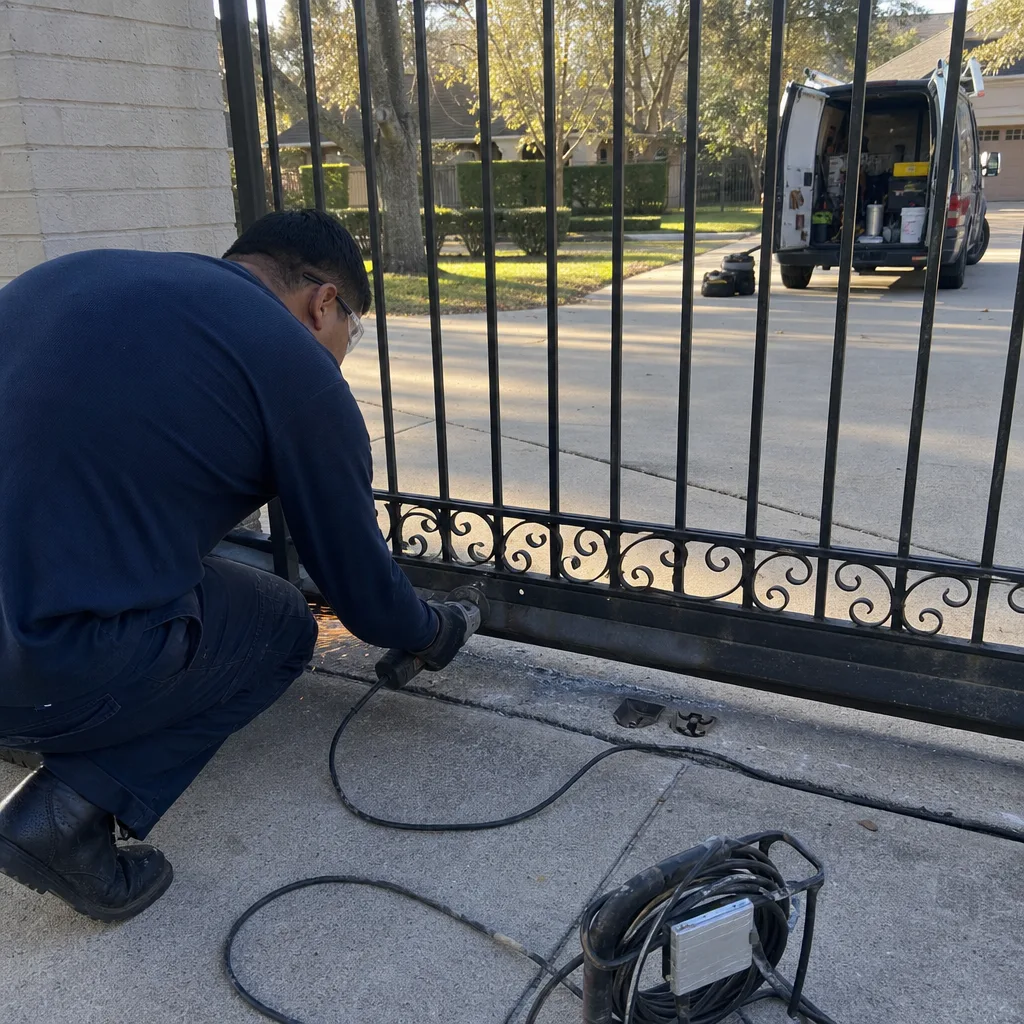
UL 325 is a safety standard for automatic gate operators published by Underwriters Laboratories, and in Texas, it has force of law through adoption into the IRC and through liability standards applied in civil court. A gate operator that isn’t UL 325 compliant is not just technically nonstandard; in a personal injury case, it’s evidence of negligence per se.
The standard requires that every automatic gate operator have at least two independent means of entrapment protection. The four categories are:
- Inherent entrapment protection: the operator’s internal current sensing or speed limiting that stops the gate when it encounters resistance.
- External entrapment protection devices: photo-eyes, edge sensors, or contact strips placed at each entrapment zone.
- Audio alarms: an audible warning that sounds before and during gate movement.
- Constant-pressure controls: a button or key switch that must be held for the gate to move, which by itself satisfies UL 325 only in specific applications.
Here’s what a UL 325 violation looks like in practice, based on Gate Repair Warning Signs: A Sugar Land Homeowner’s Reference Guide and problems we’ve documented on Sugar Land properties:
- A missing or misaligned photo-eye. The photo-eye (the infrared beam that stops the gate if something crosses the path) is the first line of defense. If it’s misaligned by two inches, the beam doesn’t break where it should, and the gate will close on a car or a child. A misaligned photo-eye is a code violation regardless of whether any permit was ever pulled.
- A disabled edge sensor. Some installers disconnect the contact strip on the gate’s leading edge to stop nuisance reversals. The gate works fine until a dog runs through the closing gap. This is one of the most dangerous shortcuts, and it’s common enough that we check for it on every service call.
- An operator with no audio alarm installed on a double-gate system. On a dual-swing or dual-slide gate, UL 325 requires an alarm that sounds before the gates move. A silent dual gate is a violation even if both photo-eyes are working.
- A gate operator rated for a different gate weight than what’s installed. If a 600-pound operator is running a 1,200-pound gate because someone upgraded the gate and kept the old motor, the inherent entrapment protection may not function correctly. The operator may fail to stop when it should.
The permit status of the original installation doesn’t change any of this. UL 325 applies to every automatic gate operator in Texas, whether it was installed with a permit in 2015 or without one in 2009. A code enforcement officer who sees a gate operated without a photo-eye on a Sugar Land property can cite the homeowner under the adopted IRC, and a plaintiffs’ attorney in a personal injury case will treat the missing device as a known hazard.
On the motor and operator side, the brand matters less than the safety devices attached to it. We service LiftMaster, FAAC, BFT, and Viking operators regularly, and the compliance issues are the same across all of them: someone removed or bypassed a safety device to stop a nuisance trip, and the gate is now unsafe. Our gate motor and opener service in Sugar Land always includes a UL 325 safety device check, whether the original install was permitted or not.
How to Get a Written Code Interpretation Before Work Begins
If you think your gate project might cross the repair/alteration line, the cleanest way to settle it is to ask the City of Sugar Land for a written code interpretation. Don’t ask the contractor, who has an incentive to minimize the answer. Don’t ask the HOA, which doesn’t administer the municipal code. Ask the authority that will issue the violation.
Here’s the step-by-step process we use for our own customers in Sugar Land:
- Write down the scope of work in plain language. “Replace failed LiftMaster LA400 operator with a BFT swing operator requiring 120V AC power. Existing gate and posts remain unchanged. New branch circuit from main panel to gate location.” The more specific, the better.
- Email the Building and Permits division through the City of Sugar Land’s official portal. The city accepts written questions and issues responses with a reference number. This creates a paper trail that survives a title search.
- Include a site plan or photograph if the gate is near a property line, right-of-way, or easement. The sight-distance triangle review only happens if the city knows where the gate sits, and a photograph answers that question faster than a legal description.
- Ask two questions explicitly. “Does this scope require a permit?” and “If no permit is required, will the city provide a written confirmation of that determination?” The second question is the one that protects you at closing.
- Keep the response with your closing documents. If the city says no permit is required, file the response where you’d keep a survey or a plat. If the city says a permit is required, you now have a written scope to submit with your application.
This process costs a few business days and produces the single document most likely to prevent a title company from holding your closing. A contractor who says “don’t worry about it” without a written city response is answering a question that isn’t in their jurisdiction. For how to hire a gate repair contractor in Sugar Land: a step-by-step guide, start with this documentation step.
For any gate project in Sugar Land, we’re glad to pull the same written interpretation on your behalf and include it in the project record. It’s part of how we document every job: a written scope, a written price, and a paper trail that matches the work.
Documentation to Keep After Permitted Gate Work
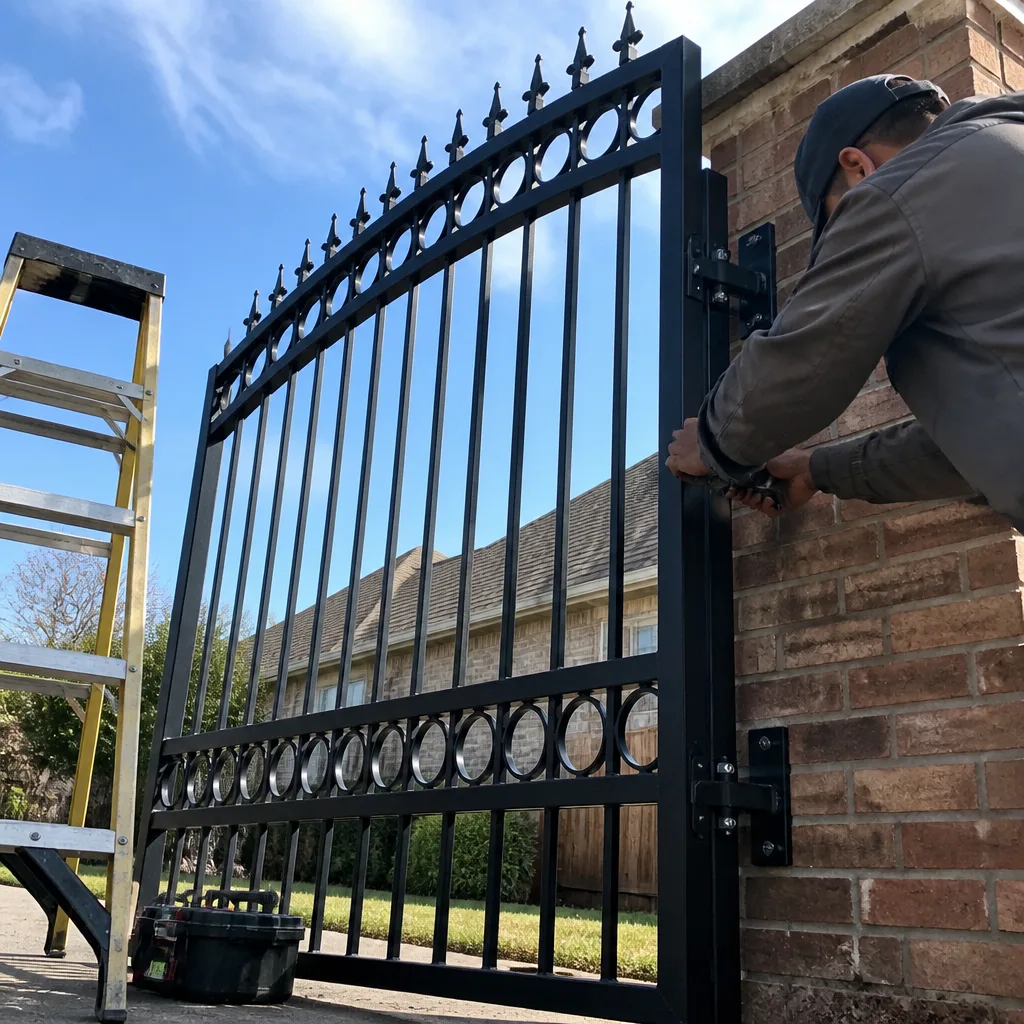
The work is done, the gate runs, the inspector signed off. The question is what you keep, and for how long. In Fort Bend County, open permits and missing documentation on gate-related electrical work are surfacing at title search more often than homeowners expect.
Here’s the documentation set we recommend, and what each piece protects:
- The permit application and the permit number. This proves the work was authorized. A title search that finds no matching permit for a visible gate alteration will flag the property.
- The inspection sign-off or certificate of approval. This proves the work was completed and passed. An issued permit with no inspection record is treated as an open permit in many Fort Bend County title searches.
- The written code interpretation, if one was obtained. If the city said no permit was required, this document is the answer to a future title company’s question. File it with your closing documents.
- The UL 325 safety device checklist or the operator’s installation manual with the safety device configuration highlighted. If the gate is later involved in an incident, this shows the devices were present at installation.
- Photos of the completed installation, including the operator, photo-eyes, edge sensors, and control panel. A photo log taken at the time of installation is the strongest evidence you have if the gate is later modified, damaged, or questioned.
- The HOA architectural approval letter, if one was required. An HOA approval is not a municipal permit, but a title company reviewing deed restrictions will check that the gate complies with the community’s covenants.
On the documentation point, Vance Gate Repair Sugar Land has a specific habit worth noting: every visit leaves a photographed record of what was found, what was set, and what was installed. Under Clause 4 of our Haven Standard (Evidence on every job), that photo log is part of the service record at no additional charge. If a title company or a buyer’s inspector asks about the gate in five years, the answer is in the file, not in someone’s memory.
Common Mistakes to Avoid
- Assuming a like-for-like operator swap never needs a permit. It doesn’t, unless the “like” part isn’t true. If the new operator runs on a different voltage or pulls more amps than the old breaker can handle, it’s an alteration, not a repair. The permit trigger is the electrical work, not the operator box.
- Treating HOA approval as a substitute for a city permit. The HOA cares about appearance and covenant compliance. The city cares about electrical safety and structural load. Neither one covers the other’s jurisdiction, and in Sugar Land, neither office notifies the other.
- Replacing a structural post without checking embedment depth. In Fort Bend County’s soil, which swells and contracts with the region’s wet and dry cycles, a post that’s too shallow will lean within two seasons. If the post carries a gate over 8 feet, the city may also treat it as a structural alteration requiring review.
- Disabling a photo-eye or edge sensor to stop nuisance reversals. This is the most dangerous shortcut we see on Sugar Land gates. It converts a compliant system into a code violation and a liability. A nuisance reversal has a cause: bad alignment, a failing sensor, or a wiring fault. Fix the cause.
- Installing a gate within the sight-distance triangle at a driveway approach. A gate at the wrong setback doesn’t get a permit; it gets a code enforcement notice. The city measures from the edge of the travel lane, and a gate that blocks sight lines can be ordered moved at homeowner expense.
- Pulling a permit for the gate but not for the electrical run. In Sugar Land, a gate installation permit and an electrical permit are separate filings. A gate permit with no matching electrical permit leaves the electrical work unpermitted, which is exactly what a title search finds.
When to Call a Professional
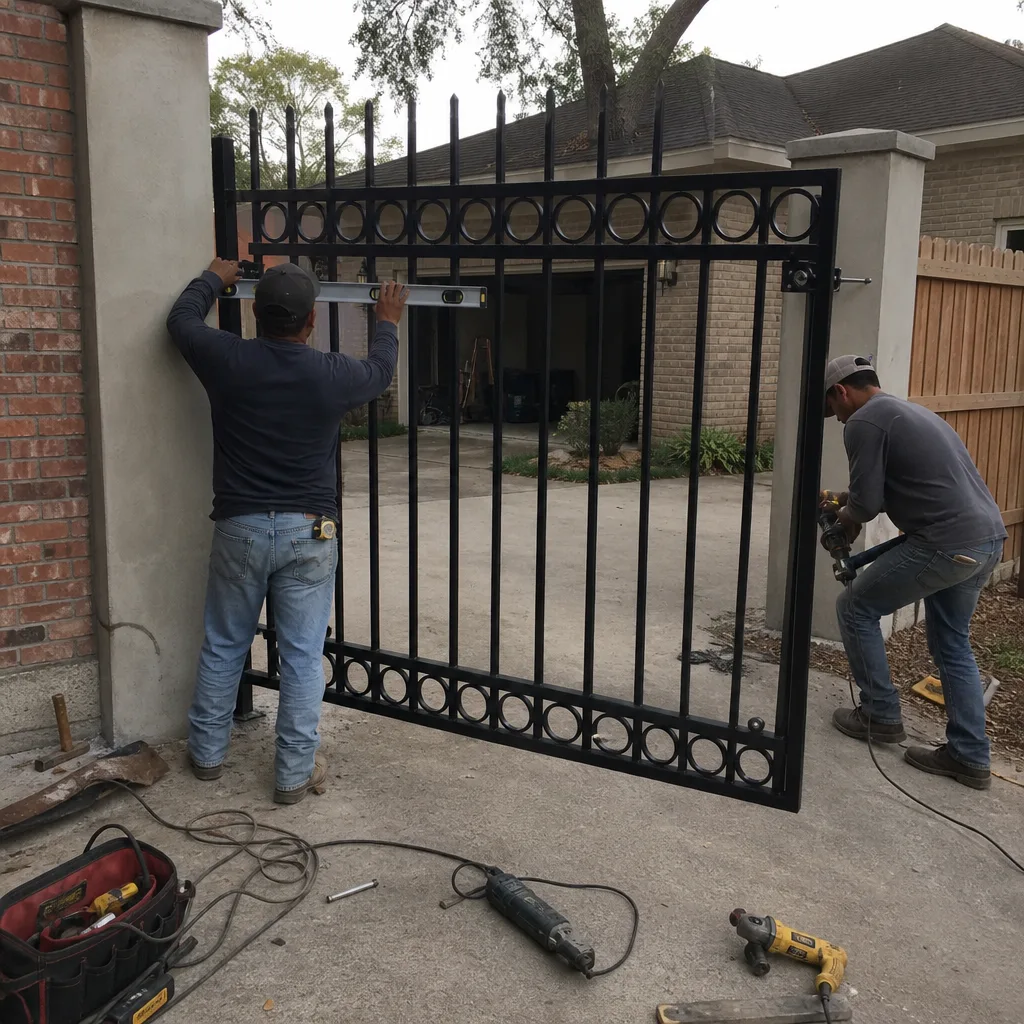
If your gate project involves new electrical wiring, relocated controls, or a post that’s leaning more than a few degrees out of plumb, call a professional who can document the work. A gate operator upgrade from solar to line voltage is not a weekend project, and a gate that doesn’t meet UL 325 because a safety device was bypassed is a code violation sitting in your driveway.
For homeowners in Sugar Land, the free estimate process is straightforward: we look at the gate, the operator, the electrical supply, and the post condition, and we tell you in writing what needs a permit, what doesn’t, and why. Vance Gate Repair Sugar Land offers free estimates in Sugar Land, and the price is on the page before any work starts. Call (346) 295-3437.
Frequently Asked Questions
No permit is required in Sugar Land for a like-for-like repair: same operator model or equivalent, same voltage, same post locations, same gate footprint. A permit becomes necessary when the work adds new electrical service, relocates a control panel, replaces structural posts, or changes the gate’s size or position.
Electrical permit fees in Sugar Land are typically based on the valuation of the work and range from roughly $75 to $350 for most residential gate operator upgrades. An HOA architectural review fee, when one exists, is separate and typically ranges from $50 to $200 depending on the community. Call (346) 295-3437 for a written breakdown before you start, and we’ll itemize the permit costs in your quote.
It’s an alteration. The new AC circuit adds an electrical branch that didn’t exist before, which triggers NEC requirements and a Sugar Land electrical permit. The operator swap itself is the easy part; the electrical run is where the code scrutiny and the title-search flag live.
Yes. UL 325 applies to every automatic gate operator in Texas, residential or commercial, regardless of when it was installed or whether a permit was pulled. A gate operated without working photo-eyes, edge sensors, or an audio alarm (on dual-gate systems) is a code violation and a known safety hazard.
Yes, and in Sugar Land communities like First Colony, Telfair, Riverstone, and Greatwood, the architectural review committee typically does require approval for any new gate or any gate that changes the appearance of the property. HOA review and city permitting are separate, and neither satisfies the other. Call (346) 295-3437 if you want a written scope that addresses both.
Keep the permit number, the inspection sign-off, any written code interpretation from the city, the UL 325 safety device configuration, and photos of the completed installation. See our more guides & resources for additional documentation templates. These documents answer title-company questions and prove compliance if the gate is ever involved in an incident or questioned during a sale.
The Bottom Line
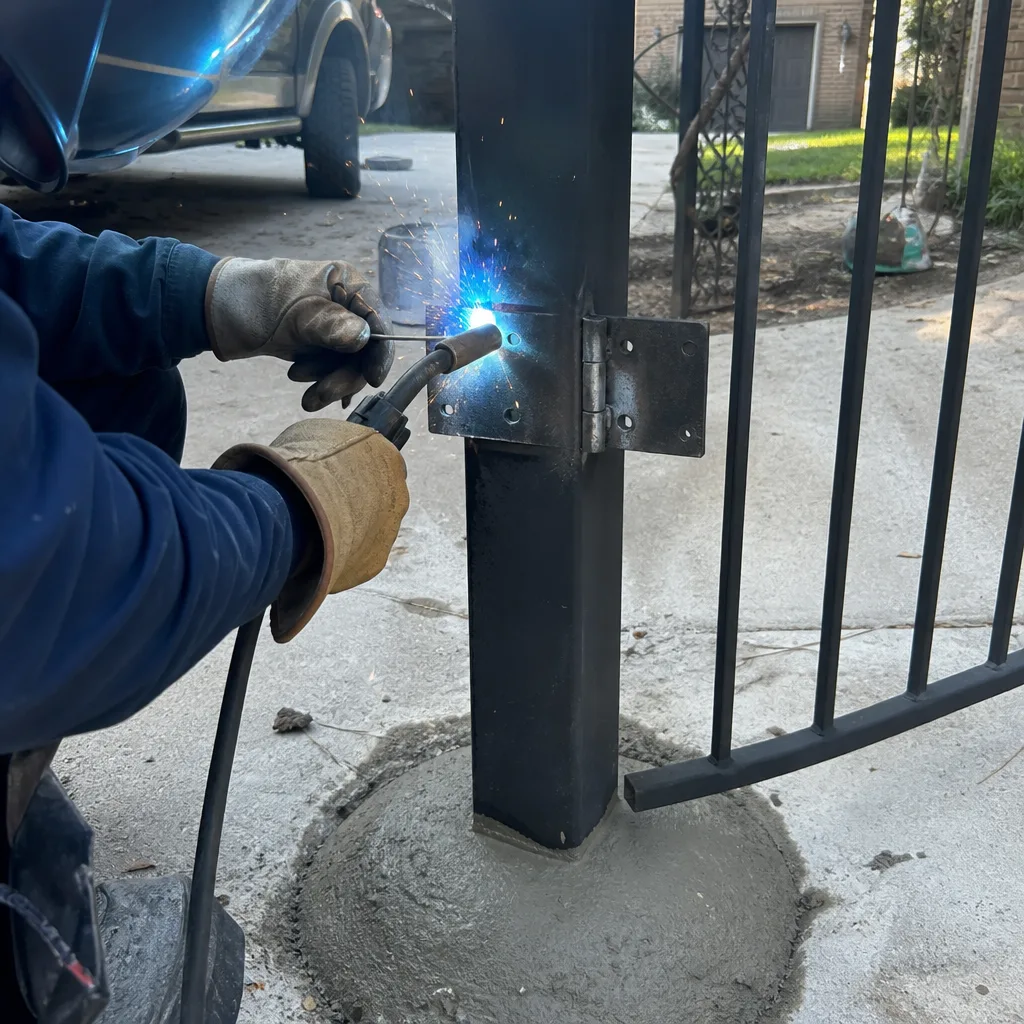
Most residential gate repairs in Sugar Land don’t need a permit, and knowing exactly where the line sits is the difference between a clean title and a delayed closing. A like-for-like repair stays unpermitted. An alteration that adds electrical service, moves controls, changes posts, or expands the gate’s footprint goes through the city. HOA review runs parallel and doesn’t substitute for a permit. UL 325 applies regardless of permit status, and a disabled photo-eye is a violation whether or not the city ever looked at the gate. Keep your paperwork: the permit, the sign-off, the code interpretation, and the photos. If you want a written answer on your specific gate before any work starts, call (346) 295-3437.
Written by Adrian Vance, Owner at Vance Gate Repair Sugar Land, serving Sugar Land since 2014.